Address
304 North Cardinal St.
Dorchester Center, MA 02124
Work Hours
Monday to Friday: 7AM - 7PM
Weekend: 10AM - 5PM
Address
304 North Cardinal St.
Dorchester Center, MA 02124
Work Hours
Monday to Friday: 7AM - 7PM
Weekend: 10AM - 5PM


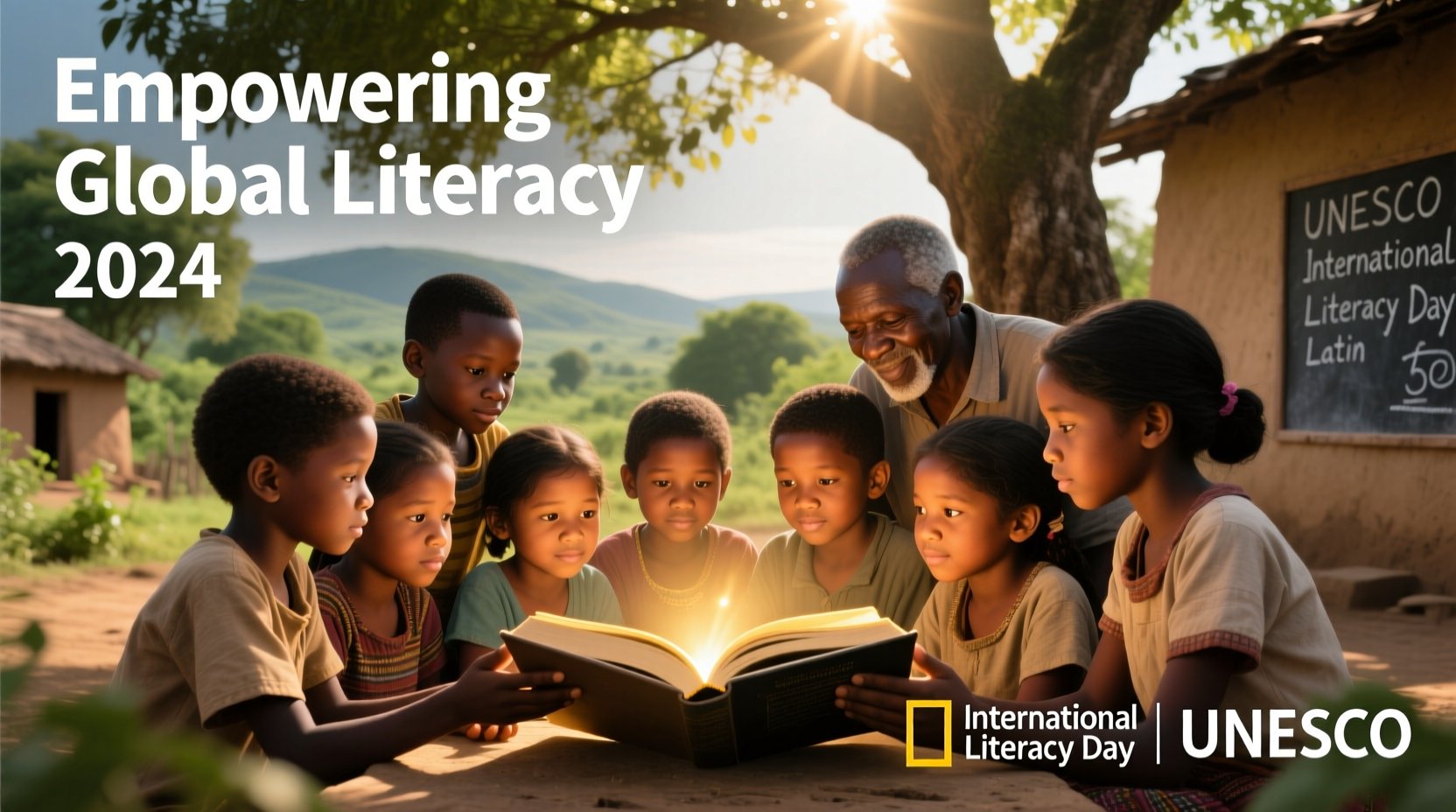
Every year on September 8, the world unites to observe International Literacy Day UNESCO, a powerful global initiative dedicated to highlighting the importance of literacy as a matter of dignity, human rights, and sustainable development 🌍. First proclaimed by UNESCO in 1966, this day serves as a vital platform to advocate for inclusive and equitable quality education for all. With over 750 million adults worldwide still lacking basic reading and writing skills—two-thirds of whom are women—the urgency of advancing literacy has never been greater 💡.
Literacy is more than just reading and writing; it empowers individuals to make informed decisions, participate in civic life, improve their health, and access better employment opportunities. As one of UNESCO’s flagship observances, International Literacy Day not only raises awareness but also mobilizes governments, educators, civil society, and private sectors to strengthen literacy programs globally 📚. This article explores the rich history, objectives, global impact, and collective efforts behind this essential commemoration.
The roots of International Literacy Day UNESCO trace back to the 14th session of UNESCO’s General Conference held in 1966. During this pivotal meeting, member states adopted Resolution 1.441, officially declaring September 8 as International Literacy Day. The resolution emphasized that literacy was a fundamental step toward eradicating poverty, reducing child mortality, achieving gender equality, and ensuring sustainable development 🏗️.
The first official celebration took place in 1967, marking the beginning of an annual tradition aimed at drawing attention to literacy challenges across nations. Over the decades, the focus of the day has evolved—from promoting basic reading and writing skills to embracing broader concepts such as digital literacy, multilingual education, and lifelong learning 📱. In recent years, UNESCO has aligned the theme of International Literacy Day with the United Nations’ Sustainable Development Goal 4 (SDG 4), which calls for inclusive and equitable quality education and promotes lifelong learning opportunities for all by 2030.
Each year, UNESCO selects a unique theme to reflect current global priorities. For example:
| Year | Theme |
|---|---|
| 2023 | “Promoting literacy for a world in transition: Building the foundation for sustainable and peaceful societies” |
| 2022 | “Transforming Literacy Learning Spaces” |
| 2021 | “Literacy for a human-centered recovery: Narrowing the digital divide” |
| 2020 | “Literacy teaching and learning in the COVID-19 crisis and beyond” |
These themes underscore how literacy must adapt to changing societal needs, including technological advancements, public health emergencies, and social equity challenges.
The primary purpose of International Literacy Day UNESCO is to spotlight the transformative power of literacy in improving lives and shaping resilient communities 🌱. It acts as both a celebration of progress and a call to action for those left behind. By focusing international attention on literacy gaps, UNESCO encourages policy reforms, increased funding, and innovative educational strategies.
One of the most significant impacts of this observance is its role in influencing national education policies. Countries use the momentum of September 8 to launch new literacy campaigns, train educators, and expand access to learning materials—especially in rural and marginalized areas 🛠️. For instance, India has used this occasion to promote adult education through its Sarva Shiksha Abhiyan program, while Nigeria has launched mobile libraries and radio-based literacy instruction in remote regions.
Moreover, International Literacy Day provides a stage for recognizing excellence in literacy work. Each year, UNESCO awards the UNESCO International Literacy Prizes, honoring up to five outstanding projects that demonstrate innovation and effectiveness in improving literacy rates. Past winners include initiatives using AI-powered tutoring systems, mother-tongue-based bilingual education, and community-led reading camps for out-of-school children 👏.
Beyond individual programs, the day contributes to global data collection and research. UNESCO’s Institute for Statistics (UIS) regularly publishes reports on literacy trends, helping countries identify disparities based on gender, age, location, and socioeconomic status. These insights guide targeted interventions and monitor progress toward SDG 4 targets.
International Literacy Day UNESCO is truly a global phenomenon, observed in over 100 countries each year 🌐. From large-scale government events to grassroots community readings, people from all walks of life come together to celebrate learning and advocate for change.
In sub-Saharan Africa, where adult literacy rates remain below 70% in many nations, NGOs and local leaders organize storytelling festivals, peer tutoring circles, and mobile classroom drives. In Latin America, countries like Brazil and Colombia integrate literacy into vocational training and indigenous language preservation efforts. Meanwhile, in high-income countries such as Canada and Germany, the focus often shifts to digital literacy, immigrant integration, and adult re-skilling programs 💻.
Schools around the world mark the day with special assemblies, book donations, and student-led literacy workshops. Libraries host free reading hours, and publishers sometimes release discounted or open-access educational content. Social media amplifies these efforts, with hashtags like #InternationalLiteracyDay and #ReadForLife trending globally, fostering cross-border dialogue and solidarity ✨.
Partnerships play a crucial role in maximizing reach and impact. UNESCO collaborates with organizations such as UNICEF, the World Bank, the Global Partnership for Education (GPE), and regional bodies like the African Union to coordinate multi-stakeholder initiatives. Private sector involvement has also grown, with tech companies donating e-learning platforms and telecom providers offering zero-rated access to educational websites during the week of the observance.
Crucially, youth and learners themselves are increasingly placed at the center of these activities. Their voices are featured in panel discussions, policy consultations, and creative campaigns, reinforcing the idea that literacy is not something done to people, but something they actively engage in and benefit from 🗣️.
As we reflect on the enduring significance of International Literacy Day UNESCO, it becomes clear that literacy is not merely a skill—it is a gateway to freedom, opportunity, and human dignity 🌟. Despite remarkable progress over the past half-century, millions still face barriers to accessing even the most basic education. Marginalized groups—including girls, refugees, persons with disabilities, and linguistic minorities—are disproportionately affected.
This annual observance reminds us that investing in literacy is investing in peace, sustainability, and shared prosperity. Governments must prioritize education budgets, educators need continuous professional development, and communities should be empowered to lead local solutions. Technology offers unprecedented tools, but only if deployed equitably and ethically.
To learn more about how you can support global literacy efforts, we encourage you to visit the official International Literacy Day UNESCO website. There, you’ll find resources, event updates, educational toolkits, and ways to get involved in this vital mission. Whether you’re a teacher, policymaker, parent, or student, your contribution matters. Together, let’s build a world where everyone can read, write, and thrive 📖💪.