Address
304 North Cardinal St.
Dorchester Center, MA 02124
Work Hours
Monday to Friday: 7AM - 7PM
Weekend: 10AM - 5PM
Address
304 North Cardinal St.
Dorchester Center, MA 02124
Work Hours
Monday to Friday: 7AM - 7PM
Weekend: 10AM - 5PM


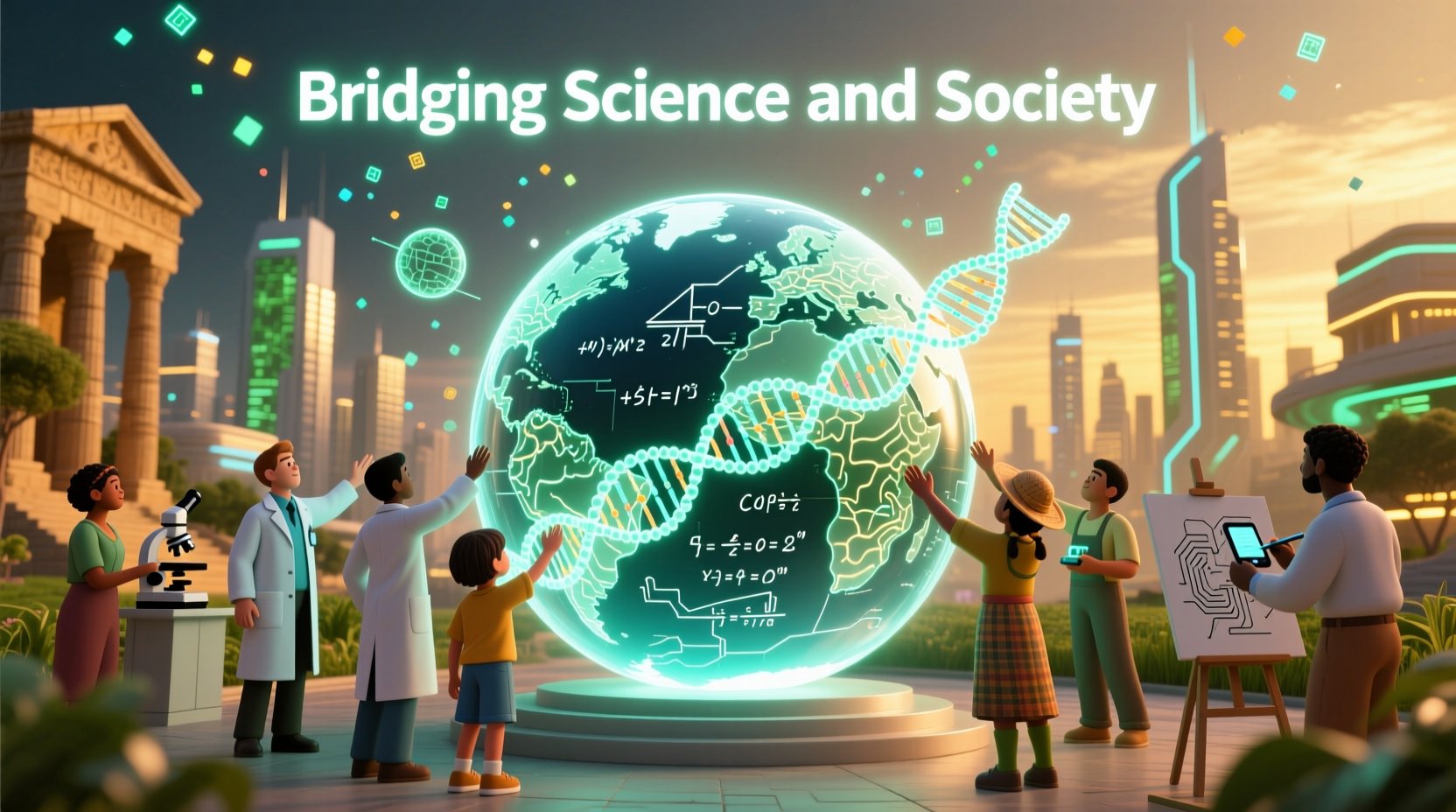
Every year on November 10, the global community unites to observe World Science Day for Peace and Development, a pivotal international observance established by UNESCO to highlight the critical role of science in shaping a more equitable, sustainable, and peaceful world. This day is not merely a ceremonial event; it serves as a powerful reminder that scientific innovation, when guided by ethical principles and inclusive collaboration, can address humanity’s most pressing challenges—from climate change and public health crises to technological inequality and environmental degradation.
The essence of this day lies in its mission to bridge the gap between science and society. It encourages dialogue among scientists, policymakers, educators, and citizens, fostering mutual understanding and shared responsibility. As we face an era defined by rapid technological advancement and complex global threats, World Science Day for Peace and Development stands as a beacon of hope, promoting science as a universal language for cooperation and progress 💡🤝.
The roots of World Science Day for Peace and Development trace back to the World Conference on Science for the Twenty-First Century, held in Budapest in 1999. This landmark gathering brought together over 2,000 participants from 138 countries, including scientists, government officials, and civil society representatives. The conference culminated in the adoption of the Declaration on Science and the Use of Scientific Knowledge and the Science Agenda – Framework for Action, both of which emphasized the need for greater public engagement in science and the importance of using scientific knowledge for societal benefit.
In response to these outcomes, UNESCO’s 31st General Conference adopted Resolution 20 in 2001, officially proclaiming November 10 as World Science Day for Peace and Development. The resolution underscored the belief that “science should be used for the benefit of all” and called for increased investment in scientific research, especially in developing nations. Since then, the day has been celebrated annually with events ranging from public lectures and science fairs to policy forums and student competitions.
The choice of date was symbolic—marking the closing of the 1999 Budapest Conference—and served as a commitment to renew global efforts toward making science accessible, transparent, and socially responsible.
The primary purpose of World Science Day for Peace and Development is threefold: to promote public awareness of the importance of science, to strengthen national and international commitments to scientific research, and to encourage dialogue between science and society. Each year, the day is themed around urgent global issues, allowing stakeholders to focus their efforts on specific challenges.
For example, recent themes have included:
These annual themes guide activities worldwide and help align scientific priorities with the United Nations Sustainable Development Goals (SDGs), particularly SDG 4 (Quality Education), SDG 9 (Industry, Innovation, and Infrastructure), and SDG 13 (Climate Action).
One of the most significant impacts of this observance has been the increased visibility of science in policymaking. Governments and institutions use this day to announce new funding initiatives, launch research programs, or reaffirm commitments to open science. For instance, several African nations have used the occasion to expand STEM education in rural areas, while European countries have promoted citizen science projects that empower communities to participate directly in data collection and analysis.
| Year | Theme | Key Focus Area |
|---|---|---|
| 2023 | Building Trust in Science | Scientific integrity, combating misinformation |
| 2022 | Basic Sciences for Sustainable Development | Fundamental research, green technologies |
| 2021 | Building Fairer Societies through Science | Equity, inclusion, access to innovation |
| 2020 | Science for and with Society in Disruptive Times | Pandemic response, digital transformation |
Moreover, the day fosters cross-border scientific collaboration. Joint research initiatives between universities in low- and high-income countries have emerged from partnerships formed during World Science Day events, demonstrating how international solidarity in science can lead to tangible outcomes.
World Science Day for Peace and Development is celebrated across continents, reflecting the universal value of science. From schoolchildren conducting experiments in classrooms to Nobel laureates delivering keynote speeches at international conferences, participation spans all ages, disciplines, and regions.
In Latin America, countries like Brazil and Argentina host large-scale science festivals that attract thousands of visitors, featuring interactive exhibits on renewable energy, biodiversity, and space exploration. In Asia, India and Japan organize national science weeks coinciding with the observance, integrating government-led campaigns with grassroots outreach.
Africa has seen growing momentum, with nations such as South Africa, Kenya, and Senegal leveraging the day to advocate for increased investment in local research institutions and to celebrate indigenous knowledge systems alongside modern science. UNESCO supports many of these efforts through grants, technical assistance, and coordination of regional networks.
International organizations also play a crucial role. The United Nations system, including agencies like WHO, UNEP, and UNICEF, often collaborates with UNESCO to co-host webinars and publish joint statements reinforcing the integration of science into development strategies.
Civil society and the private sector are equally involved. Tech companies sponsor hackathons focused on solving real-world problems, while NGOs run campaigns to improve science education in underserved communities. Social media amplifies these efforts, with hashtags like #WorldScienceDay trending globally and engaging millions online.
This widespread engagement underscores a shared recognition: science is not the domain of elites but a collective human endeavor essential for survival and prosperity.
In an age marked by disinformation, climate emergencies, and widening inequality, World Science Day for Peace and Development offers a vital platform for reasserting the values of evidence-based decision-making, inclusivity, and global cooperation. It reminds us that science is not neutral—it must be directed toward justice, sustainability, and peace.
By celebrating this day, we honor the researchers who dedicate their lives to discovery, the educators who inspire future generations, and the communities who apply scientific knowledge to improve daily life. More importantly, we reaffirm our collective responsibility to ensure that science serves all people, not just a privileged few.
The challenges ahead are immense, but so too is our capacity for innovation and solidarity. Let us seize this opportunity to strengthen the bonds between science and society, investing in education, protecting academic freedom, and promoting open access to knowledge.
To learn more about how you can get involved, explore past themes, or support global science initiatives, visit the official United Nations page for this important observance: World Science Day for Peace and Development. Together, we can build a future where science truly becomes a force for peace and development for all 🌍✨.