Address
304 North Cardinal St.
Dorchester Center, MA 02124
Work Hours
Monday to Friday: 7AM - 7PM
Weekend: 10AM - 5PM
Address
304 North Cardinal St.
Dorchester Center, MA 02124
Work Hours
Monday to Friday: 7AM - 7PM
Weekend: 10AM - 5PM


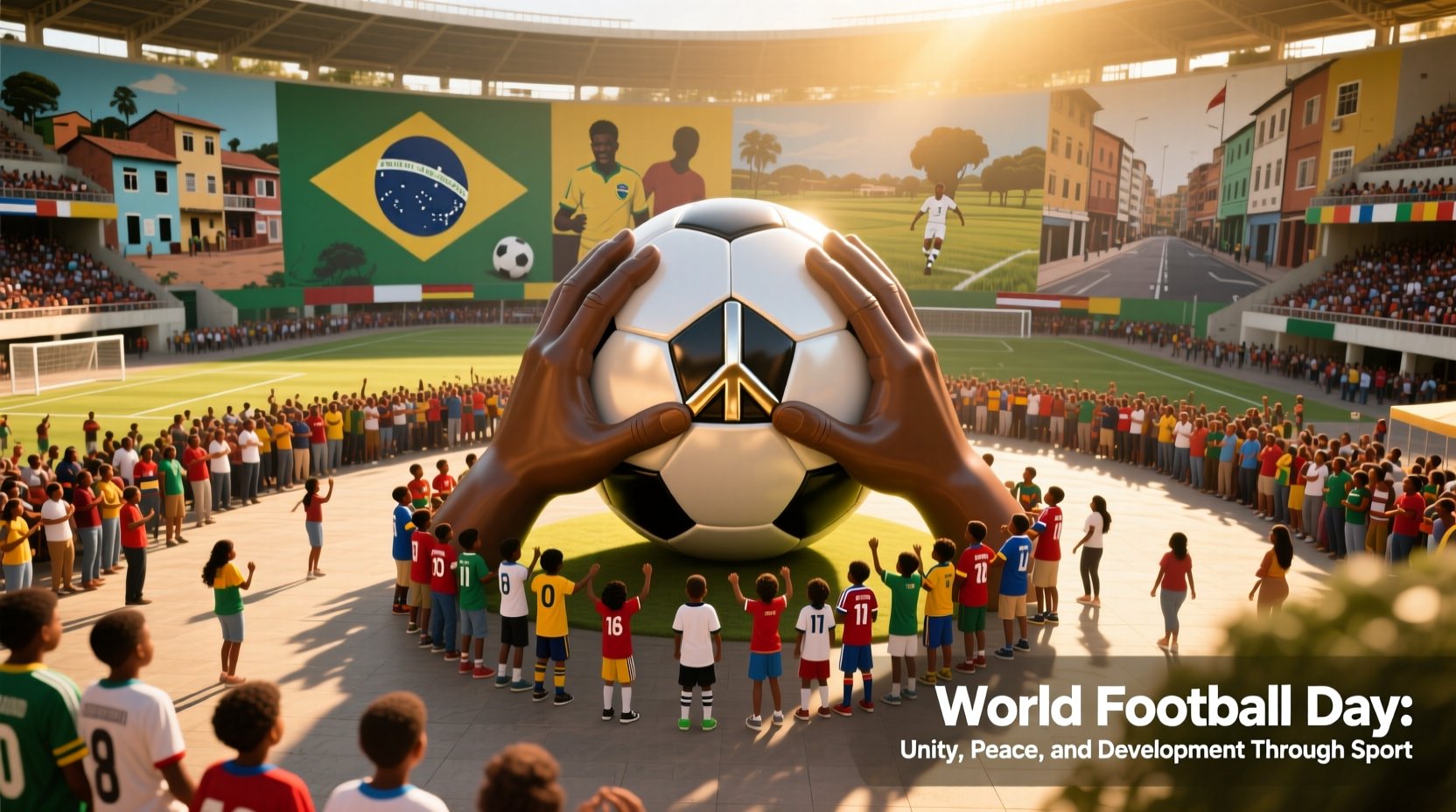
Every year on December 10, the world unites not through diplomacy or treaties, but through the universal language of sport — football 🌍⚽. World Football Day, officially recognized by the United Nations General Assembly through Resolution A/RES/78/281, is more than just a celebration of goals and glory; it’s a powerful affirmation of how sport can bridge divides, foster peace, and advance sustainable development. As one of the most widely played and watched sports globally, football transcends borders, cultures, and languages, making it an ideal vehicle for promoting global unity and social change.
This international observance was established to highlight football’s unique ability to inspire inclusion, empower youth, promote gender equality, and support education and health initiatives. With over 270 million people actively involved in the sport worldwide — including players, referees, coaches, and administrators — football is not merely entertainment; it is a catalyst for transformation 💥. The official designation of World Football Day underscores the UN’s commitment to leveraging sport as a tool for achieving the Sustainable Development Goals (SDGs), particularly those related to quality education, reduced inequalities, and peace.
The journey toward recognizing World Football Day began with decades of grassroots advocacy, where communities around the globe used football to bring people together — from refugee camps to urban slums, from war-torn regions to schools promoting gender equity. The idea gained formal momentum when several UN member states, led by Portugal and supported by FIFA and other international organizations, introduced a draft resolution calling for the establishment of an annual day dedicated to football.
On May 23, 2024, the United Nations General Assembly adopted Resolution A/RES/78/281, officially proclaiming December 10 as World Football Day. The date was chosen deliberately — coinciding with Human Rights Day — to emphasize the deep connection between human rights and sport. This symbolic alignment reinforces the principle that access to sport, like education and healthcare, is a fundamental right and a pathway to dignity and empowerment.
The resolution acknowledges football’s role in fostering dialogue among civilizations and cultures, promoting mutual understanding, and strengthening social cohesion. It also recognizes the efforts of national governments, civil society, sports federations, and non-governmental organizations in using football programs to combat discrimination, reduce violence, and integrate marginalized populations.
| Year | Event |
|---|---|
| 1904 | FIFA founded in Paris, laying the foundation for international football governance. |
| 1930 | First FIFA World Cup held in Uruguay, uniting nations through competition. |
| 2005 | UN launches Sport for Development and Peace initiative. |
| 2017 | UN adopts Resolution A/RES/71/206 recognizing the role of sport in development and peace. |
| 2024 | UN General Assembly adopts A/RES/78/281, establishing World Football Day on December 10. |
The core purpose of World Football Day goes far beyond celebrating athletic excellence. Its true mission lies in harnessing the power of football to address pressing global challenges. Across continents, football-based programs have been instrumental in advancing key development objectives:
For example, in Rwanda, football tournaments were used after the 1994 genocide to encourage reconciliation between ethnic groups. In Colombia, former child soldiers have found healing and purpose through organized football programs. In Jordan, Syrian refugee girls play in safe spaces created by UNICEF and local partners, gaining confidence and life skills.
The impact is measurable. According to UNESCO, every $1 invested in sport for development yields up to $3 in social returns. Football, being the most accessible team sport requiring minimal equipment, offers exceptional value in reaching underserved populations. On World Football Day, these stories are amplified, inspiring new partnerships and funding for scalable initiatives.
Since its proclamation, World Football Day has sparked vibrant celebrations across the globe. From small village pitches to iconic stadiums like Maracanã and Wembley, millions participate in friendly matches, awareness campaigns, and educational events. Governments, NGOs, schools, and professional clubs organize activities aligned with the UN’s vision of sport for good.
In 2024, over 120 countries marked the inaugural observance with synchronized kick-offs, charity matches featuring legends of the game, and digital campaigns promoting fair play and inclusion. Major football associations such as UEFA, CONMEBOL, and CAF endorsed the day, while stars like Cristiano Ronaldo, Megan Rapinoe, and Mohamed Salah shared messages of unity on social media platforms, reaching billions.
| Country | Activity | Organizer |
|---|---|---|
| Brazil | Nationwide youth tournament focused on anti-racism education | Ministry of Sports & NGOs |
| Kenya | Girls’ football festival promoting STEM education | UNICEF & Local Academies |
| Germany | Inclusive match for athletes with disabilities | DFB (German FA) & Special Olympics |
| Japan | School curriculum integration: lessons on teamwork via football | Ministry of Education |
| Canada | Indigenous youth tournament celebrating cultural heritage | Canadian Soccer Association |
Digital engagement has also surged, with hashtags like #WorldFootballDay and #GameForGood trending globally. Online forums host discussions on topics ranging from climate action in stadiums to ethical sponsorship in football. Virtual reality experiences allow users to walk in the shoes of a refugee athlete, deepening empathy and awareness.
World Football Day stands as a testament to the transformative power of sport — a reminder that a simple ball and a shared field can ignite hope, heal wounds, and build bridges where words fail. By officially recognizing this day through Resolution A/RES/78/281, the United Nations affirms that football is not just a game, but a vital instrument for peace, development, and human dignity ✨.
As individuals, communities, and nations continue to embrace this global observance, the ripple effects grow stronger — more children stay in school, more women break barriers, more displaced people find belonging, and more societies choose cooperation over conflict. The pitch becomes a classroom, a therapy room, and a diplomatic chamber all at once.
To learn more about how football is changing lives around the world and how you can get involved, visit the official United Nations page for World Football Day. Whether you’re a player, coach, fan, or advocate, your participation matters. Let us celebrate not only the beauty of the game but the better world it helps create — one pass, one goal, one act of solidarity at a time ⚽🌍❤️.