Address
304 North Cardinal St.
Dorchester Center, MA 02124
Work Hours
Monday to Friday: 7AM - 7PM
Weekend: 10AM - 5PM
Address
304 North Cardinal St.
Dorchester Center, MA 02124
Work Hours
Monday to Friday: 7AM - 7PM
Weekend: 10AM - 5PM


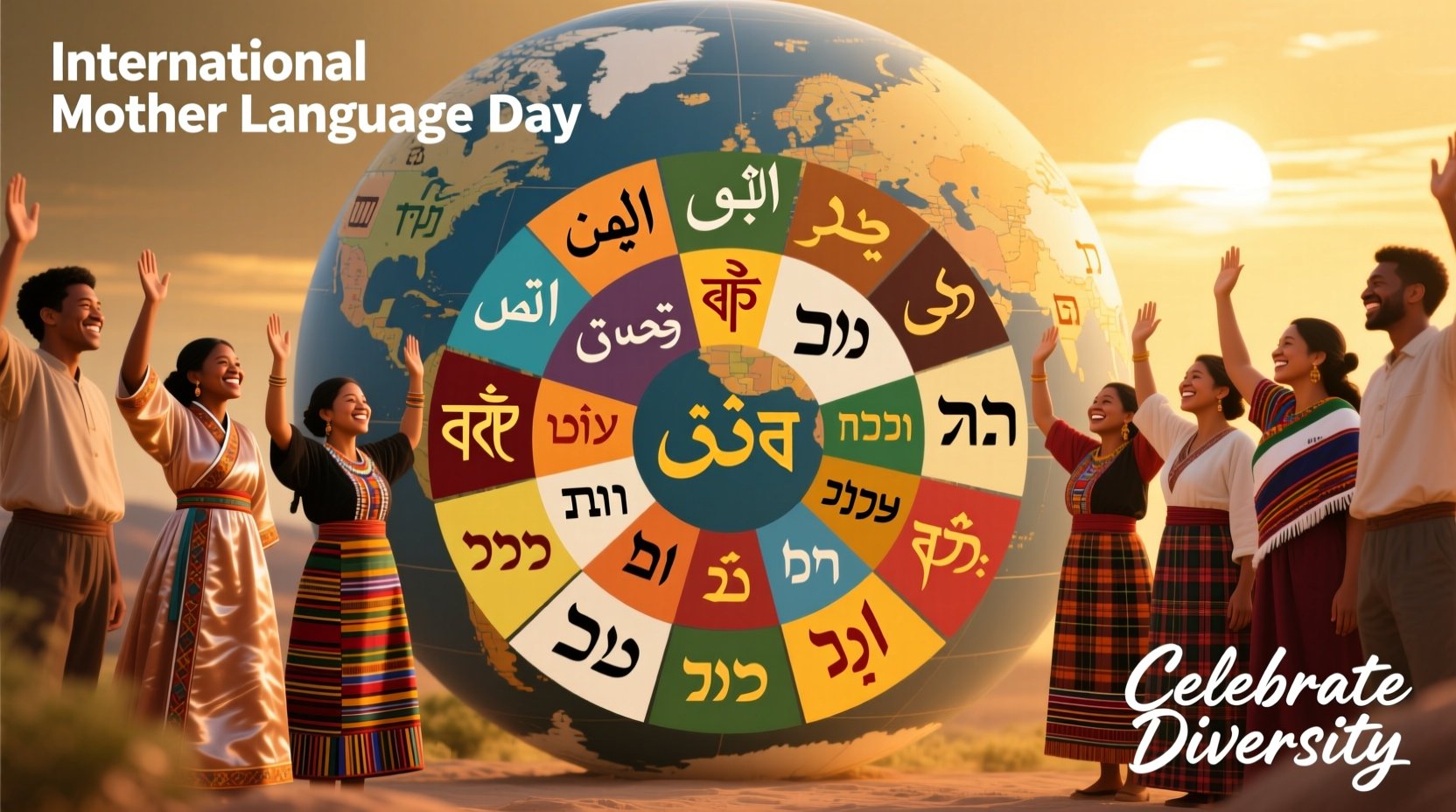
Every year on February 21, the world unites to honor International Mother Language Day, a global observance established by UNESCO and recognized by the United Nations through Resolution A/RES/56/262. This day shines a spotlight on the vital role that mother tongues play in fostering inclusive societies, preserving cultural heritage, and promoting multilingual education. With over 7,000 languages spoken worldwide — many of which are endangered — this commemoration serves as both a celebration and a call to action. The official UN page for International Mother Language Day emphasizes its mission: to protect linguistic diversity and empower communities through language.
The roots of International Mother Language Day trace back to a pivotal moment in history — the struggle for linguistic rights in what was then East Pakistan (now Bangladesh). On February 21, 1952, students and activists took to the streets of Dhaka to protest the Pakistani government’s decision to impose Urdu as the sole national language, disregarding Bengali, the mother tongue of the majority in the eastern region.
In a tragic turn, police opened fire on peaceful demonstrators, killing several including Rafiq Uddin Ahmed, Abdus Salam, and others who became symbols of resistance. Their sacrifice galvanized public sentiment and ultimately contributed to the recognition of Bengali as an official language. Over time, their courage inspired a broader movement for linguistic justice.
In 1999, UNESCO formally proclaimed February 21 as International Mother Language Day, acknowledging the power of language as a vehicle for identity, communication, education, and social integration. The UN General Assembly later endorsed this initiative with Resolution A/RES/56/262, affirming the importance of protecting all languages from extinction.
| Year | Event |
|---|---|
| 1952 | Bangla language movement; martyrs fall in Dhaka protests |
| 1956 | Bengali recognized as official language in Pakistan |
| 1999 | UNESCO proclaims February 21 as International Mother Language Day |
| 2000 | First official observance globally |
| 2002 | UN General Assembly adopts Resolution A/RES/56/262 |
| 2023 | Theme: ‘Multilingual Education – A Pillar of Learning and Inclusion’ |
At its core, International Mother Language Day is not merely about remembering a historical event — it is about advancing a vision of equity, inclusion, and cultural sustainability. One of its primary goals is to raise awareness about the growing number of endangered languages. According to UNESCO, approximately 40% of the world’s languages are at risk of disappearing, often taking with them centuries of traditional knowledge, oral histories, and unique worldviews.
The impact of this observance extends into multiple domains:
Each year, the UN selects a theme to guide global activities. For instance, recent themes have included:
These themes reflect evolving priorities, especially the integration of digital tools to preserve and teach lesser-known languages.
In New Zealand, the Māori language (Te Reo Māori) faced steep decline throughout the 20th century due to colonial policies. However, sustained advocacy led to the establishment of Kōhanga Reo (language nests) — immersion preschools where children learn exclusively in Te Reo. Supported by government funding and public campaigns, these initiatives have helped reverse language loss. Today, more than 20,000 New Zealanders speak Te Reo fluently — a testament to how policy, community engagement, and International Mother Language Day-inspired efforts can drive linguistic revival.
From Tokyo to Toronto, Cape Town to Copenhagen, International Mother Language Day is celebrated with vibrant events that highlight local and global linguistic richness. Governments, schools, NGOs, and cultural organizations host poetry readings, storytelling sessions, language workshops, and art exhibitions — all centered around the value of speaking one’s mother tongue.
Some notable examples include:
Digital platforms also play a crucial role. Google, Microsoft, and other tech companies have launched keyboard layouts, translation services, and AI models supporting underrepresented languages. Social media campaigns using hashtags like #MotherLanguageDay and #SpeakYourMotherTongue amplify voices across borders.
| Program | Objective | Region |
|---|---|---|
| UNESCO Atlas of the World’s Languages in Danger | Document and monitor endangered languages | Global |
| Mobile Museums for Oral Heritage (Africa) | Record stories and songs in indigenous dialects | Sub-Saharan Africa |
| AI for Indigenous Languages (Latin America) | Develop speech recognition tools for Quechua, Guarani | Andean Region |
| Global Citizenship Education (GCED) | Promote multilingualism in school curricula | Asia-Pacific |
International Mother Language Day stands as a powerful reminder that every language is a living archive of human experience. It honors those who fought for the right to speak their truth in their own voice and challenges us to protect the rich tapestry of global expression. As globalization continues to reshape communication, safeguarding linguistic diversity becomes not just a cultural imperative but a moral one.
By embracing mother tongues in education, media, and governance, we build societies where no one feels silenced by language barriers. Whether you speak one language or ten, your participation matters. Share a word in your native tongue. Teach a child a phrase from your ancestry. Advocate for inclusive language policies in your community.
To learn more about how you can get involved, visit the official United Nations page for this important observance: International Mother Language Day. Together, we can ensure that no language fades into silence — because when we lose a language, we lose a part of humanity itself. 🌏✨