Address
304 North Cardinal St.
Dorchester Center, MA 02124
Work Hours
Monday to Friday: 7AM - 7PM
Weekend: 10AM - 5PM
Address
304 North Cardinal St.
Dorchester Center, MA 02124
Work Hours
Monday to Friday: 7AM - 7PM
Weekend: 10AM - 5PM


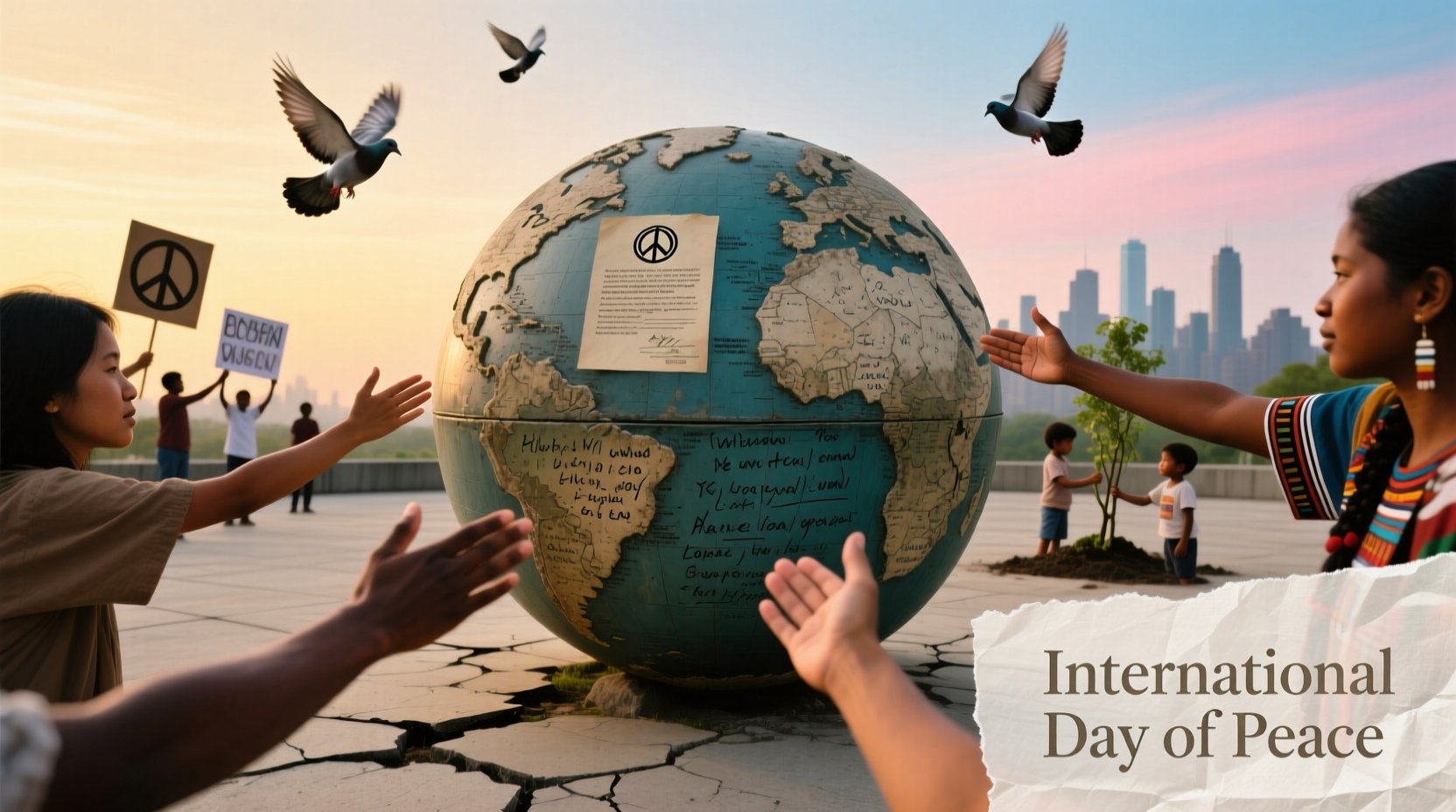
The International Day of Peace, observed annually on September 21, stands as a powerful symbol of humanity’s shared aspiration for a world free from violence and conflict 🌍🕊️. Established by the United Nations through Resolution A/RES/36/67, this day unites nations, communities, and individuals in a collective commitment to peacebuilding, dialogue, and non-violence. Every year, people across continents participate in events that promote harmony, reflect on global challenges, and advocate for sustainable solutions to conflict.
As geopolitical tensions rise and humanitarian crises persist, the relevance of the International Day of Peace has never been more urgent. It is not merely a symbolic observance but a call to action — an invitation to foster empathy, strengthen diplomacy, and invest in long-term peace initiatives. From schools organizing peace-themed lessons to governments declaring temporary ceasefires, the ripple effects of this day are both tangible and transformative.
The journey toward a globally recognized day dedicated to peace began in the aftermath of World War II, when the United Nations was founded with the primary mission of maintaining international peace and security. While peace remained a central theme, it wasn’t until decades later that a formal annual observance was established.
In 1981, the UN General Assembly adopted Resolution A/RES/36/67, which officially designated the third Tuesday of September as the International Day of Peace. The resolution called upon member states, organizations, and individuals to commemorate the day through educational activities and public awareness campaigns centered on peace. This initial designation reflected a growing global consciousness about the need for structured efforts to prevent war and promote cooperation.
Over time, the date evolved for greater consistency and impact. In 2001, the General Assembly unanimously voted to fix the International Day of Peace on September 21 each year, beginning in 2002. This change ensured a predictable annual observance, allowing for better planning and broader participation worldwide. Since then, the day has served as a platform to highlight pressing issues such as climate change, gender equality, refugee rights, disarmament, and youth engagement in peace processes.
| Year | Event | Significance |
|---|---|---|
| 1981 | Adoption of Resolution A/RES/36/67 | Established the third Tuesday of September as Peace Day |
| 2001 | Resolution A/RES/55/282 | Moved observance to fixed date: September 21 |
| 2009 | First “Peace Bell” ringing at UN Headquarters | Symbolic event reinforcing global unity |
| 2015 | Launch of Sustainable Development Goal 16 | Promote peaceful societies, access to justice, strong institutions |
| 2020 | Theme: “Shaping Peace Together” | Focused on solidarity during pandemic |
The core purpose of the International Day of Peace is twofold: to reaffirm our collective responsibility to prevent conflict and to inspire concrete actions that build resilient, inclusive societies. Unlike other observances that focus solely on remembrance or celebration, this day emphasizes proactive engagement — encouraging governments, civil society, educators, and youth to take measurable steps toward peace.
One of the most significant impacts of the day is its ability to mobilize diverse stakeholders around common goals. For instance, the United Nations often uses the occasion to launch new peace initiatives or renew calls for ceasefire agreements in active conflict zones. In several instances, armed groups have honored temporary truces during the day, enabling humanitarian aid delivery and creating space for dialogue.
Education plays a crucial role in amplifying the message. Schools around the world incorporate peace curricula, host student-led forums, and organize art exhibitions focused on themes like tolerance, diversity, and emotional intelligence. These activities nurture a culture of peace from an early age, planting seeds for future generations of peacemakers.
Moreover, the International Day of Peace contributes to policy development. Its annual themes — such as “End Racism. Build Peace.” (2023) or “Recovering Better for an Equitable and Sustainable World” (2021) — align with broader UN agendas, including the Sustainable Development Goals (SDGs). Specifically, SDG 16 calls for promoting just, peaceful, and inclusive societies, making the Peace Day a vital advocacy tool.
What makes the International Day of Peace truly remarkable is its universal reach. From bustling cities to remote villages, millions participate in events that reflect their unique cultural expressions of peace while sharing a unified vision.
In New York, the UN headquarters hosts a ceremonial bell-ringing using the Peace Bell, forged from coins donated by children from 60 countries. The bell’s inscription reads: “World Peace Bell — May Peace Prevail on Earth.” This simple yet profound ritual sets the tone for global observances.
Countries mark the day in various ways:
Non-governmental organizations also play a pivotal role. Groups like UNICEF, Amnesty International, and Peace Direct run campaigns focusing on child soldiers, refugee integration, and women’s roles in peacebuilding. Social media amplifies these messages, with hashtags like #InternationalDayOfPeace and #PeaceDay trending globally, reaching billions.
Notably, the private sector has increasingly joined the movement. Companies encourage employees to engage in volunteerism, donate to peace-related causes, or observe moments of silence. Some tech firms even launch digital tools to track peace indices or map conflict zones in real-time.
The International Day of Peace is far more than a calendar event — it is a moral compass guiding humanity toward compassion, justice, and coexistence. As wars continue to displace families, climate-induced conflicts escalate, and discrimination undermines social cohesion, this day reminds us that peace is not passive; it must be actively built, nurtured, and defended 🕊️❤️.
Each individual holds the power to contribute — whether through a kind word, a community initiative, or supporting policies that prioritize diplomacy over division. Governments must uphold their commitments to human rights and disarmament, while educators shape minds that reject hatred and embrace empathy.
To learn how you can get involved, explore educational resources, or support official UN peace programs, we invite you to visit the official International Day of Peace website. There, you’ll find toolkits, event calendars, historical documents including Resolution A/RES/36/67, and inspiring stories from around the world.
Let us not wait for September 21 to act. Let every day be a step toward peace. Join the global movement. Visit https://www.un.org/en/observances/international-day-peace today and become part of the legacy of peacebuilders shaping a better tomorrow.