Address
304 North Cardinal St.
Dorchester Center, MA 02124
Work Hours
Monday to Friday: 7AM - 7PM
Weekend: 10AM - 5PM
Address
304 North Cardinal St.
Dorchester Center, MA 02124
Work Hours
Monday to Friday: 7AM - 7PM
Weekend: 10AM - 5PM


\n
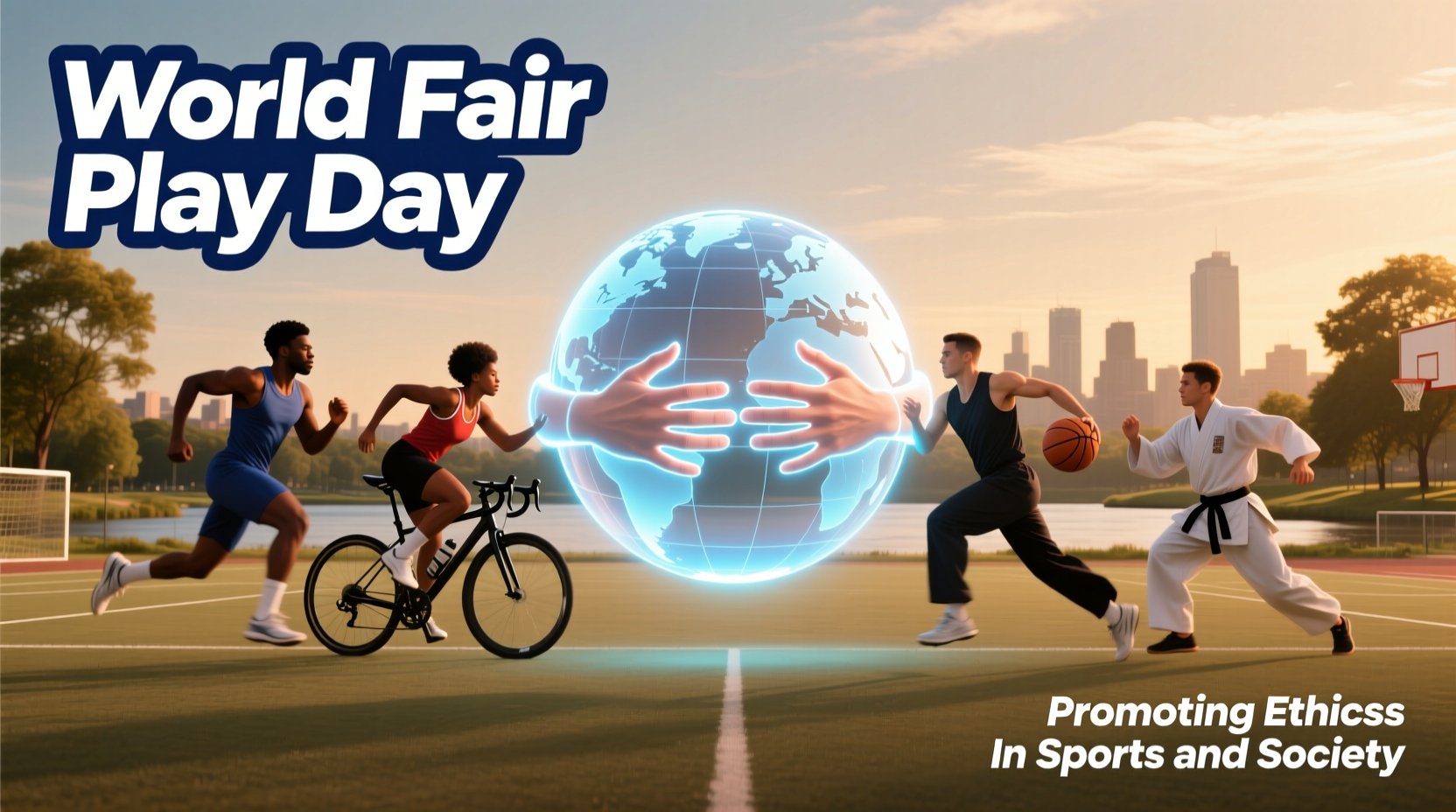
World Fair Play Day, observed annually on March 2nd, is a global initiative established by the United Nations to promote ethical behavior, respect, and integrity in sports and beyond. Officially recognized through UN General Assembly resolution A/RES/78/310, this international day emphasizes that fair play is not just a principle for athletes but a universal value essential to building peaceful, inclusive societies \u2728. As sport continues to unite people across cultures and borders, the principles of fairness, equality, and mutual respect it fosters have far-reaching implications in education, community development, and conflict resolution.
\n
The designation of World Fair Play Day reflects growing recognition that sports can serve as a powerful platform for teaching life skills and moral values. From youth leagues to professional arenas, fair play encourages accountability, discourages cheating and violence, and nurtures empathy among participants. This article explores the origins, objectives, global engagement, and transformative impact of World Fair Play Day, offering insight into why this observance matters now more than ever in fostering a culture of justice and dignity worldwide \ud83c\udf93.
\n\n
\n
The concept of fair play has long been central to the philosophy of sport. Rooted in ancient Olympic traditions, where athletes competed with honor and respect for their opponents, the idea transcends competition to embody broader societal ideals. However, as modern sports grew in scale and commercialization, concerns about doping, match-fixing, corruption, and unsportsmanlike conduct began to threaten the integrity of athletic contests.
\n
In response, international organizations, including UNESCO and the International Fair Play Committee (CIFP), championed efforts to preserve ethical standards in sport. These initiatives laid the groundwork for formal recognition at the United Nations level. On December 14, 2023, the UN General Assembly adopted resolution A/RES/78/310, proclaiming March 2nd as World Fair Play Day. This landmark decision underscored the role of fair play in advancing Sustainable Development Goals (SDGs), particularly those related to quality education (SDG 4), gender equality (SDG 5), reduced inequalities (SDG 10), and peace and justice (SDG 16).
\n
The selection of March 2nd is symbolic—it commemorates the founding date of the CIFP in 1963, an organization dedicated to rewarding acts of sportsmanship and ethical conduct. By institutionalizing this date within the UN calendar of observances, member states affirmed that fair play is not merely an aspirational ideal but a measurable standard for personal and collective behavior.
\n\n
\n
The primary purpose of World Fair Play Day is to raise awareness about the importance of ethical conduct in sport and everyday life. It calls on governments, educators, athletes, coaches, and civil society to integrate fair play principles into policies, curricula, and public campaigns. The observance aims to:
\n
\n
\n
\n
\n
\n
\n\n
One of the most significant impacts of World Fair Play Day lies in its ability to influence policy and practice. For example, schools incorporating fair play modules into physical education programs report improved student behavior and social cohesion. Similarly, national sports federations using the day to launch anti-doping campaigns or diversity training see increased compliance and public trust.
\n\n
Beyond athletics, the principles celebrated on this day apply to workplaces, classrooms, and political systems. Fair play embodies equity, rule-following, and accountability—values critical to democratic functioning and human rights protection. In post-conflict regions, sport-for-development programs grounded in fair play have helped rebuild communities and bridge ethnic divides.
\n\n
| Aspect | Fair Play Principle | Real-World Application |
|---|---|---|
| Respect | Valuing opponents, officials, and teammates | Reducing verbal abuse in youth soccer leagues |
| Equality | Equal opportunity regardless of gender, race, or disability | Expanding access to para-sports facilities |
| Integrity | Rejecting cheating and corruption | Implementing independent oversight in national federations |
| Responsibility | Accepting consequences of actions | Athletes admitting fouls even when unnoticed by referees |
\n\n
\n
Since its adoption, World Fair Play Day has gained momentum across continents. Governments, NGOs, educational institutions, and sports bodies organize events ranging from school workshops to international conferences. Below are notable examples of global engagement:
\n\n
\n
\n
\n
\n
\n
\n\n
The International Olympic Committee (IOC) and the Global Association of International Sports Federations (GAISF) also endorse the day, aligning it with their own ethics frameworks. Social media plays a pivotal role, with hashtags like #FairPlayDay and #PlayWithPurpose trending globally, amplifying messages of integrity and inclusion.
\n\n
Moreover, grassroots movements have emerged, such as peer-led fair play ambassadors in Latin American schools and women’s cricket leagues in Afghanistan advocating for equal treatment under challenging conditions. These diverse expressions of commitment illustrate how local actions contribute to a shared global vision.
\n\n
\n
World Fair Play Day is much more than a tribute to good sportsmanship—it is a call to action for individuals and institutions to uphold justice, dignity, and mutual respect in all areas of life. As demonstrated through its historical roots, policy relevance, and widespread global participation, this UN-recognized observance serves as a vital tool for nurturing ethical citizenship and sustainable development.
\n\n
In an era marked by polarization, misinformation, and systemic inequities, the timeless principles of fair play offer a roadmap toward healthier communities and stronger democracies. Whether on the field or in the classroom, boardroom, or ballot box, choosing fairness over advantage strengthens the fabric of society.
\n\n
To learn more about how you can support and participate in World Fair Play Day, visit the official United Nations page: https://www.un.org/en/observances/fair-play-day. Join the movement to make integrity a cornerstone of human interaction—because when we play fair, everyone wins \ud83c\udf89.