Address
304 North Cardinal St.
Dorchester Center, MA 02124
Work Hours
Monday to Friday: 7AM - 7PM
Weekend: 10AM - 5PM
Address
304 North Cardinal St.
Dorchester Center, MA 02124
Work Hours
Monday to Friday: 7AM - 7PM
Weekend: 10AM - 5PM


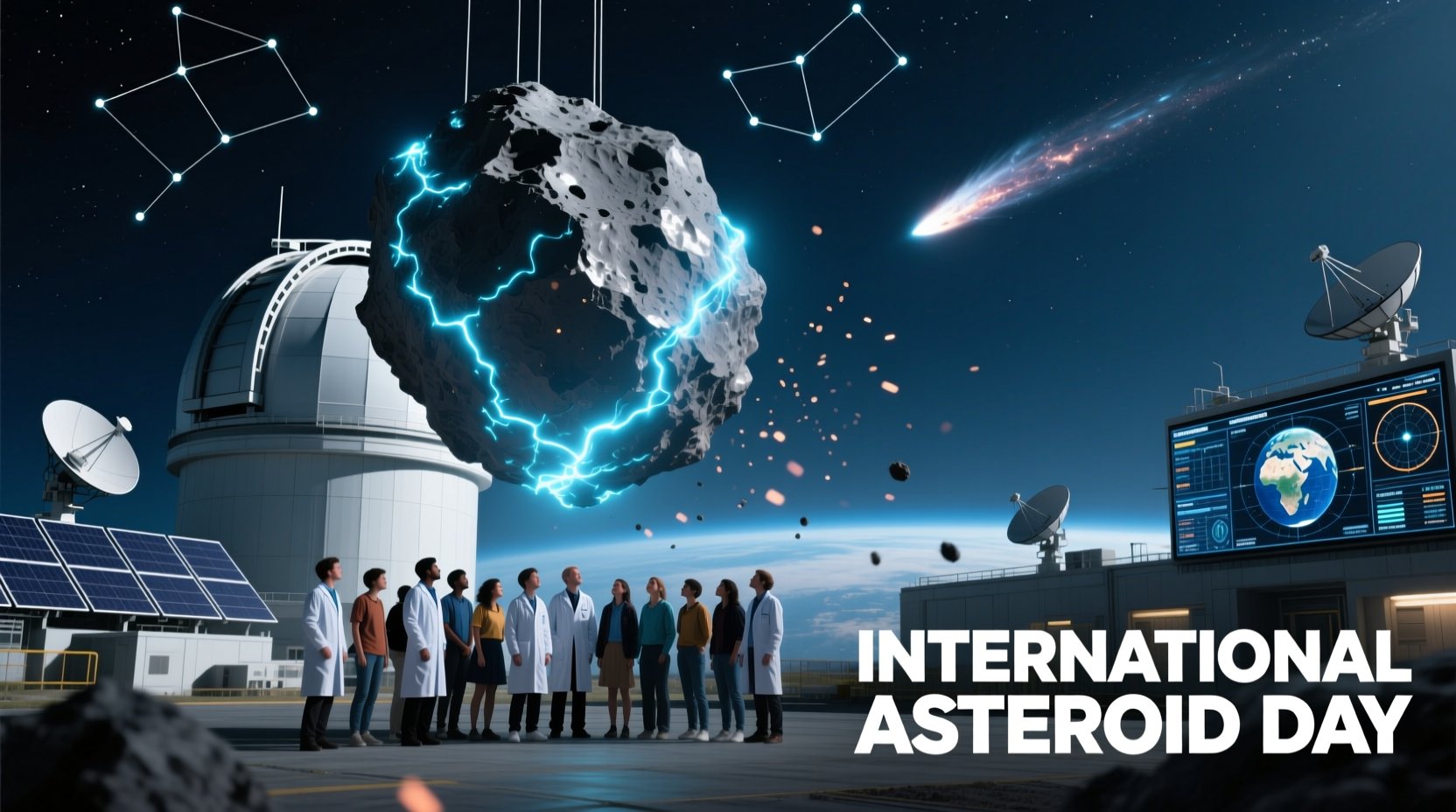
Every year on June 30, the world observes International Asteroid Day, a global initiative established by the United Nations to raise awareness about the potential dangers posed by asteroids and near-Earth objects (NEOs). This date was chosen to commemorate the largest recorded asteroid impact in history—the 1908 Tunguska event in Siberia, which flattened over 2,000 square kilometers of forest. Since its official recognition through UN General Assembly Resolution A/RES/71/90, International Asteroid Day has become a vital platform for promoting scientific education, planetary defense strategies, and international cooperation.
Asteroids are not just relics of the early solar system—they are also potential threats to life on Earth. While large-scale impacts are rare, even small asteroids can cause significant regional damage, as demonstrated by the 2013 Chelyabinsk meteor explosion in Russia. By dedicating a day to understanding these celestial bodies, humanity takes a proactive step toward safeguarding our planet. Through public outreach, expert discussions, and collaborative research, International Asteroid Day empowers individuals and governments alike with knowledge that could one day prevent catastrophe 💫.
The idea of asteroid impacts was long considered the realm of science fiction—until real-world events forced scientists and policymakers to take notice. The Tunguska explosion of 1908 remained poorly understood for decades, but modern analysis confirmed it was caused by an airburst from a stony asteroid roughly 50–60 meters in diameter. No crater was formed, yet the blast released energy equivalent to 10–15 megatons of TNT—over 1,000 times more powerful than the atomic bomb dropped on Hiroshima.
Fast forward to February 15, 2013: a 20-meter asteroid entered Earth’s atmosphere over Chelyabinsk, Russia, exploding at an altitude of about 30 kilometers. The shockwave injured over 1,500 people, mostly due to shattered glass from windows blown out by the pressure wave. This wake-up call highlighted how unprepared most nations were for such events—even relatively minor ones.
In response to growing concerns, renowned physicist and musician Dr. Brian May (yes, the Queen guitarist!), along with astrophysicist Grig Richters and filmmaker Danica Remy, co-founded Asteroid Day in 2014. Their vision was simple yet profound: use June 30 to educate the public about asteroid science and advocate for better detection and deflection technologies. The campaign quickly gained momentum, supported by Nobel laureates, astronauts, and space agencies worldwide.
This grassroots movement culminated in December 2016 when the UN General Assembly adopted Resolution A/RES/71/90, officially designating June 30 as International Asteroid Day. The resolution acknowledged the need for “global awareness and preparedness” and encouraged member states to strengthen efforts in monitoring NEOs and developing mitigation strategies.
The primary purpose of International Asteroid Day is threefold: to increase public awareness, promote scientific research, and foster international collaboration in planetary defense. Unlike natural disasters such as earthquakes or hurricanes, asteroid impacts are among the few catastrophic risks that humans may be able to prevent—if we act in time.
One of the key achievements of this observance has been shifting the conversation from fear to empowerment. Instead of viewing asteroids solely as doomsday threats, educators and scientists now emphasize their dual nature: they pose risks, but they also offer opportunities. Some asteroids contain valuable minerals like platinum, nickel, and water—resources that could support future deep-space missions or even fuel a space-based economy.
More importantly, International Asteroid Day supports the development of early warning systems and impact mitigation technologies. For example:
To illustrate the scope of current capabilities and goals, here’s a comparative table highlighting key aspects of planetary defense initiatives:
| Initiative | Lead Organization | Objective | Status |
|---|---|---|---|
| DART Mission | NASA (USA) | Test kinetic impactor technology | Completed (2022) |
| Hera Mission | ESA (Europe) | Analyze post-impact structure of Dimorphos | Planned Launch: 2024 |
| Catalina Sky Survey | University of Arizona (USA) | Detect and track near-Earth objects | Ongoing |
| NEOWISE Space Telescope | NASA | Infrared detection of asteroids | Active until 2024 (planned end) |
| GAWN | United Nations (COPUOS) | Coordinate global asteroid detection and warning | Operational since 2014 |
These programs demonstrate that planetary defense is no longer theoretical—it is operational. International Asteroid Day plays a crucial role in sustaining political will, funding, and public interest in these life-saving technologies.
What makes International Asteroid Day truly unique is its global reach and inclusive spirit. Events take place in over 70 countries each year, ranging from academic lectures and school workshops to public stargazing nights and virtual panel discussions. Institutions such as the Smithsonian, the European Space Agency, and the SETI Institute regularly host live streams featuring astronauts, planetary scientists, and policy experts.
Notable participants include former astronauts like Apollo 9’s Rusty Schweickart and ISS veteran Chris Hadfield, who have used their platforms to stress the importance of preparedness. Educational campaigns target students with interactive simulations, asteroid tracking apps, and STEM challenges designed to inspire the next generation of space explorers.
Moreover, citizen science plays a growing role. Projects like Astro 4D and Universe Awareness encourage amateur astronomers to contribute observational data. Social media amplifies the message, with hashtags like #AsteroidDay and #ProtectEarth trending annually on June 30.
Even cities directly affected by past impacts—like Chelyabinsk—have embraced the day with memorial events and educational forums. This blend of remembrance, science, and hope underscores the universal relevance of asteroid awareness.
International Asteroid Day is far more than a symbolic observance—it is a vital component of humanity’s long-term survival strategy. As we continue to explore space and deepen our understanding of the cosmos, we must also protect our home planet from external threats. The legacy of events like Tunguska and Chelyabinsk reminds us that vigilance cannot be optional; it must be continuous and collective.
By raising awareness, advancing technology, and fostering global cooperation, this UN-designated day strengthens our resilience against one of the most unpredictable yet preventable natural hazards. Whether you’re a student, scientist, policymaker, or simply curious about space, your engagement matters.
To learn more about how you can get involved, discover upcoming events, or access educational resources, visit the official United Nations page for International Asteroid Day. Together, we can ensure that the next asteroid encounter ends not in destruction—but in discovery. 🌠