Address
304 North Cardinal St.
Dorchester Center, MA 02124
Work Hours
Monday to Friday: 7AM - 7PM
Weekend: 10AM - 5PM
Address
304 North Cardinal St.
Dorchester Center, MA 02124
Work Hours
Monday to Friday: 7AM - 7PM
Weekend: 10AM - 5PM


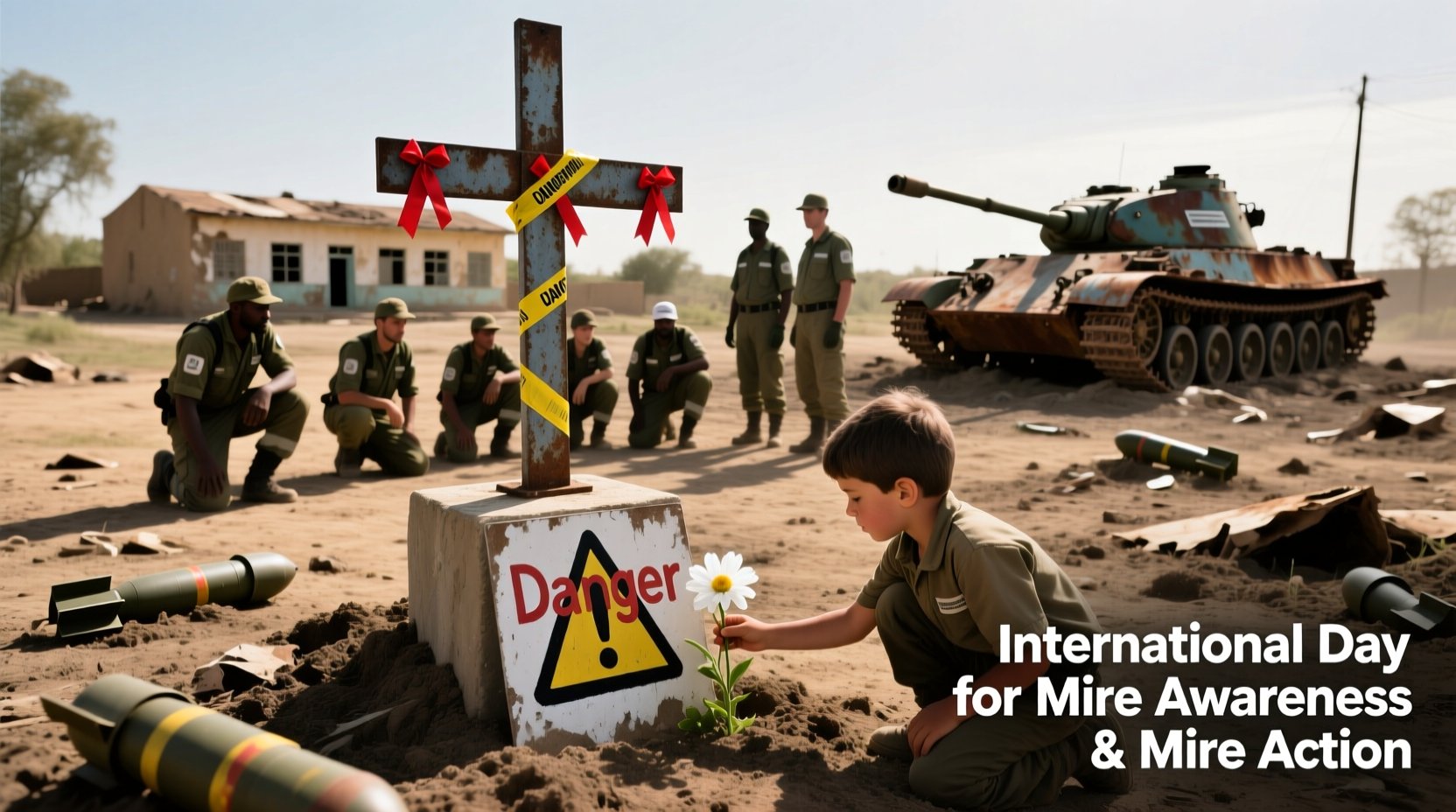
The International Day for Mine Awareness and Assistance in Mine Action, observed annually on April 4, stands as a powerful reminder of the enduring threat posed by landmines and explosive remnants of war (ERW) to communities worldwide 🌍. Established by the United Nations General Assembly through Resolution A/RES/60/97, this day unites governments, humanitarian organizations, and individuals in a shared mission: to raise awareness, promote mine clearance, and support survivors. Every year, thousands of lives—especially children, farmers, and displaced families—are disrupted or lost due to hidden explosives left behind after conflicts have ended 💣.
This observance is not merely symbolic; it drives real-world change by mobilizing resources, influencing policy, and spotlighting progress in mine-affected regions such as Afghanistan, Cambodia, Ukraine, and parts of Africa. With over 60 countries still contaminated by landmines, according to UN data, the need for sustained international cooperation has never been greater ⚠️. The International Day serves as both a wake-up call and a platform for hope, emphasizing that safe land is a fundamental human right—and one worth fighting for.
The roots of the International Day for Mine Awareness and Assistance in Mine Action trace back to growing global concern over the humanitarian impact of anti-personnel mines during the late 20th century. While efforts like the 1997 Ottawa Treaty (Mine Ban Treaty) marked major progress in banning their use, production, and stockpiling, vast areas remained dangerously contaminated. Millions of unexploded devices continued to render farmland unusable, block access to schools and hospitals, and instill fear in post-conflict societies.
In response, the United Nations intensified its mine action programs under the umbrella of the United Nations Mine Action Service (UNMAS), established in 1997. By coordinating demining operations, risk education, and victim assistance across conflict zones, UNMAS laid the groundwork for a more systematic global response. However, public awareness and funding remained inconsistent.
To address this gap, the UN General Assembly adopted Resolution A/RES/60/97 on December 8, 2005, officially designating April 4 as the International Day for Mine Awareness and Assistance in Mine Action. This resolution urged Member States, UN agencies, NGOs, and civil society to enhance cooperation and resource allocation toward eliminating the threat of mines and ERW. Since its first observance in 2006, the day has grown into a pivotal moment for advocacy, fundraising, and highlighting success stories from the field.
The primary purpose of the International Day for Mine Awareness and Assistance in Mine Action is threefold: to educate the public about the dangers of landmines, to advocate for increased funding and political will, and to celebrate the achievements of demining teams and survivor support networks 🛠️. Each year, the UN selects a theme that reflects current challenges and priorities—such as “Safe Ground, Safe Steps, Safe Home” (2022) or “From Pain to Hope” (2023)—to focus global attention on specific aspects of mine action.
One of the most significant impacts of this observance is the acceleration of demining efforts. According to the official UN page, more than 60 million landmines and explosive remnants have been destroyed since 2005. In countries like Mozambique and Sri Lanka, entire provinces have been declared mine-free thanks to sustained international support catalyzed in part by awareness campaigns around this day.
| Year | Funding Mobilized (USD) | Mines Cleared | Countries Declared Mine-Free |
|---|---|---|---|
| 2015 | $320 million | 210,000+ | 3 |
| 2018 | $410 million | 260,000+ | 5 |
| 2021 | $480 million | 310,000+ | 7 |
| 2023 | $530 million | 375,000+ | 9 |
Beyond statistics, the day fosters empathy and solidarity with survivors. It promotes inclusive development by ensuring that liberated land is used for agriculture, infrastructure, and housing—key drivers of peacebuilding and economic recovery 🌾. Moreover, it empowers local communities through education programs that teach children and adults how to recognize and report suspicious objects, reducing casualties even before full clearance is achieved.
The strength of the International Day for Mine Awareness and Assistance in Mine Action lies in its truly global reach. On April 4 each year, dozens of countries host events ranging from school workshops and media campaigns to ceremonial mine detonations and survivor testimonies. Governments reaffirm commitments, donors pledge new funds, and NGOs launch targeted outreach initiatives.
For example, in 2023, Japan hosted a regional forum in Tokyo bringing together Southeast Asian nations to share demining technologies. Meanwhile, Germany announced an additional €40 million in funding for mine action in Ukraine, where Russian forces have left behind an estimated 1.5 million unexploded devices 🇺🇦. In Colombia, former FARC combatants joined demining teams—a powerful symbol of reconciliation and transformation.
The private sector also plays a growing role. Tech companies are developing drones equipped with ground-penetrating radar, while AI algorithms help analyze satellite imagery to identify potential minefields faster than traditional methods. These innovations are often showcased during the International Day events, demonstrating how science and compassion can converge to save lives.
This multi-stakeholder collaboration exemplifies the kind of collective action necessary to tackle transnational humanitarian issues. The International Day acts as an annual catalyst, reinforcing partnerships and inspiring innovation across borders.
The International Day for Mine Awareness and Assistance in Mine Action is far more than a calendar event—it is a vital instrument of peace, safety, and dignity for millions living in the shadow of hidden explosives 💔➡️❤️. From raising awareness in classrooms to guiding billion-dollar aid packages, its influence spans continents and generations. As long as landmines continue to threaten lives and hinder development, this day will remain essential in sustaining momentum toward a safer world.
We must remember that every mine cleared represents not just a hazard removed, but a child who can play safely, a farmer who can till his soil, and a community that can rebuild with confidence. Progress is possible—but only if we stay vigilant, generous, and united in purpose.
To learn more about how you can contribute, explore ongoing projects, or understand the realities faced by mine-affected populations, visit the official United Nations page for this important observance: International Day for Mine Awareness and Assistance in Mine Action. Together, we can turn pain into progress, and fear into freedom.