Address
304 North Cardinal St.
Dorchester Center, MA 02124
Work Hours
Monday to Friday: 7AM - 7PM
Weekend: 10AM - 5PM
Address
304 North Cardinal St.
Dorchester Center, MA 02124
Work Hours
Monday to Friday: 7AM - 7PM
Weekend: 10AM - 5PM


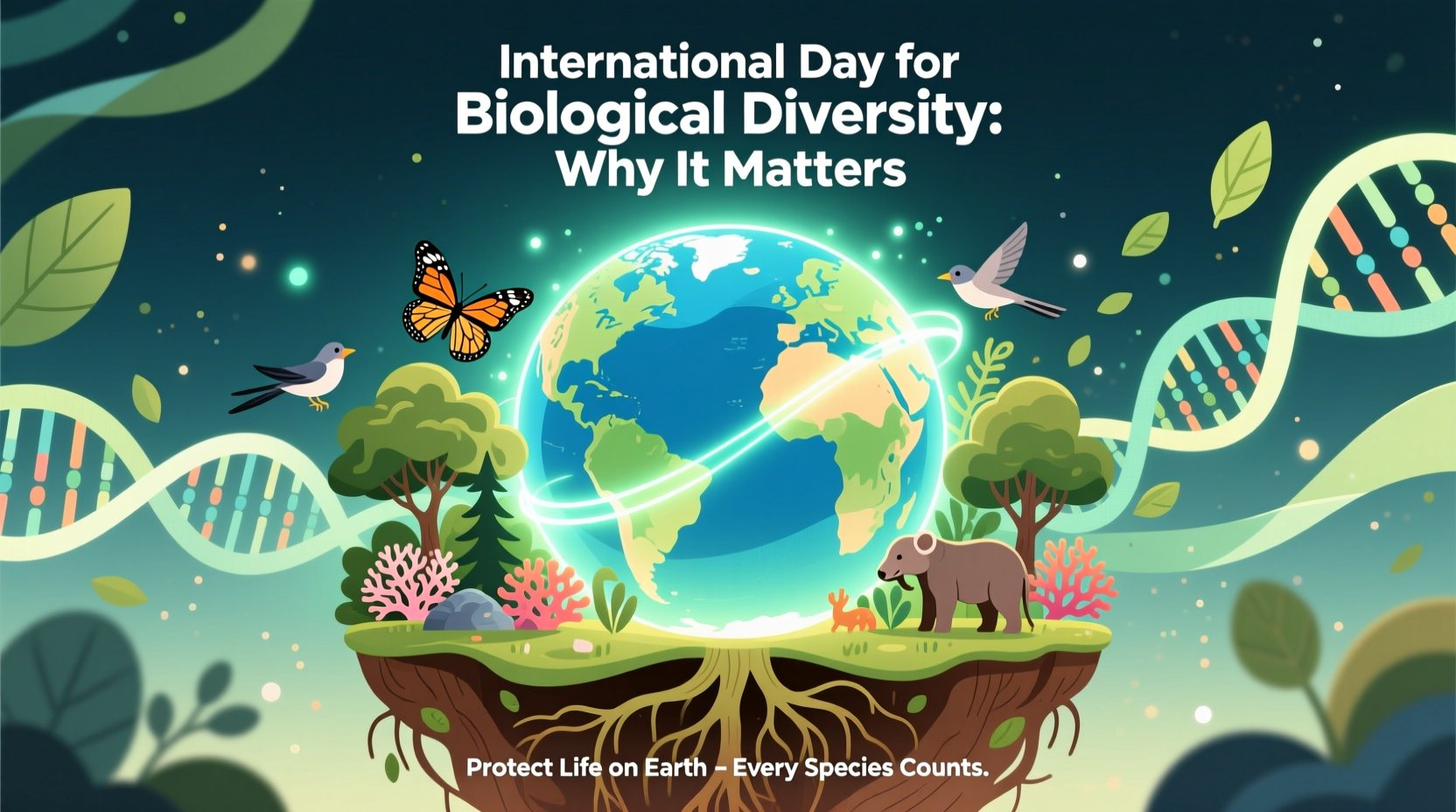
The International Day for Biological Diversity, observed annually on May 22, is a global call to recognize and protect the rich tapestry of life that sustains our planet. This day highlights the urgent need to conserve biodiversity—from microscopic organisms to vast forest ecosystems—and emphasizes how integral it is to human survival, economic prosperity, and environmental resilience. As climate change, habitat destruction, and overexploitation threaten species at an unprecedented rate, this international observance serves as both a warning and a roadmap for action.
Established by the United Nations, the International Day for Biological Diversity draws attention to the delicate balance between nature and civilization. It encourages governments, scientists, educators, communities, and individuals to engage in activities that promote sustainable development and ecological stewardship. With biodiversity underpinning food security, clean water, medicine, and climate regulation, understanding its value has never been more critical.
The roots of the International Day for Biological Diversity trace back to one of the most significant environmental agreements in history—the Convention on Biological Diversity (CBD). Adopted during the 1992 Earth Summit in Rio de Janeiro, the CBD was a landmark treaty aimed at promoting the conservation of biological diversity, the sustainable use of its components, and the fair and equitable sharing of benefits arising from genetic resources.
In December 2000, the United Nations General Assembly adopted Resolution A/RES/55/201, which officially proclaimed May 22 as the International Day for Biological Diversity. The date commemorates the adoption of the CBD text in 1992. Originally celebrated on December 29 to mark when the convention entered into force, the date was changed to May 22 in 2001 to avoid conflict with holiday seasons and improve participation globally.
This shift also aligned the day with optimal conditions for outdoor educational events and nature-based activities in many regions, especially in the Northern Hemisphere. Since then, the day has grown into a platform for raising awareness about endangered species, ecosystem degradation, invasive species, and the impacts of human activity on natural systems.
| Year | Event |
|---|---|
| 1992 | Adoption of the Convention on Biological Diversity at the Earth Summit |
| 2000 | UN Resolution A/RES/55/201 establishes May 22 as International Day for Biological Diversity |
| 2010 | Launch of the United Nations Decade on Biodiversity (2011–2020) |
| 2021 | Start of the UN Decade on Ecosystem Restoration (2021–2030) |
| 2022 | Adoption of the Kunming-Montreal Global Biodiversity Framework |
The primary purpose of the International Day for Biological Diversity is to educate the public about the importance of biodiversity and mobilize action across sectors. Each year, the day is marked with a specific theme—such as “Building a Shared Future for All Life” or “Our Solutions Are in Nature”—designed to focus global dialogue on pressing ecological challenges.
Biodiversity is not just about saving charismatic animals like tigers or pandas; it encompasses the full variety of life forms, including plants, fungi, insects, marine species, and microorganisms. These elements form complex networks that support ecosystem functions such as pollination, soil fertility, carbon sequestration, and disease regulation. For example:
Despite its value, biodiversity is declining faster than at any time in human history. According to the Intergovernmental Science-Policy Platform on Biodiversity and Ecosystem Services (IPBES), around 1 million species are now threatened with extinction, many within decades. Drivers include deforestation, pollution, overfishing, agricultural expansion, and climate change.
The impact of this loss is profound. Reduced biodiversity weakens ecosystems’ ability to recover from shocks, threatens food supplies, increases vulnerability to pandemics, and undermines cultural identities tied to nature. By spotlighting these issues, the International Day for Biological Diversity pushes policymakers to strengthen protections, fund conservation initiatives, and integrate biodiversity goals into national development plans.
While the outlook is concerning, there have been notable successes. Countries like Costa Rica have reversed deforestation trends through reforestation and eco-tourism. Protected areas now cover nearly 17% of terrestrial and 8% of marine environments worldwide—progress toward Target 11 of the Aichi Biodiversity Targets. Additionally, community-led conservation projects in Africa and Southeast Asia demonstrate how local knowledge can restore degraded lands and safeguard wildlife.
However, enforcement gaps, insufficient funding, and lack of political will remain obstacles. The post-2020 Global Biodiversity Framework aims to address these by setting ambitious targets, such as protecting 30% of land and sea by 2030 (“30×30”) and reducing harmful subsidies by $500 billion annually.
One of the strengths of the International Day for Biological Diversity is its broad reach and inclusivity. Governments, NGOs, schools, research institutions, indigenous groups, and private companies all participate in events ranging from tree planting drives and wildlife exhibitions to policy roundtables and digital campaigns.
The United Nations Environment Programme (UNEP), the Secretariat of the Convention on Biological Diversity, and partner organizations coordinate global efforts, providing toolkits, social media assets, and educational materials. In recent years, virtual events have expanded access, allowing people from remote regions to join webinars and live discussions.
Indigenous peoples play a particularly vital role. Though they make up less than 5% of the world’s population, they manage or hold tenure over 25% of land surface and support about 80% of remaining biodiversity. Their traditional practices—such as rotational farming, sacred grove preservation, and seasonal hunting bans—offer time-tested models of sustainability.
Cities are also stepping up. Urban biodiversity strategies now feature green roofs, native plant landscaping, pollinator corridors, and wetland restoration. Programs like the Global Partnership for Cities and Biodiversity help municipalities align with international goals.
| Country/Region | Initiative | Outcome |
|---|---|---|
| Germany | National Strategy on Biological Diversity | Set targets for halting species loss by 2030 |
| Kenya | Community conservancies in Maasai Mara | Increased wildlife populations and ecotourism revenue |
| Canada | Oceans Protection Plan | Expanded marine protected areas and Indigenous co-management |
| Singapore | Cities and Biodiversity Outlook | Integrated biodiversity into urban planning |
The International Day for Biological Diversity is far more than a symbolic gesture—it is a vital reminder that every species lost diminishes the fabric of life on Earth. As we face converging crises of climate change, habitat loss, and emerging diseases, preserving biodiversity emerges not as an option but as a necessity for survival and well-being.
This annual observance empowers individuals and institutions to take meaningful steps—from supporting sustainable agriculture and reducing plastic waste to advocating for stronger environmental policies. Education, innovation, and cross-border cooperation are key to reversing current trends and building a future where humans live in harmony with nature.
To learn more about how you can get involved, explore events, or access official resources, visit the United Nations’ dedicated page for this important day: International Day for Biological Diversity. Together, we can ensure that the incredible diversity of life continues to thrive for generations to come. 🌿