Address
304 North Cardinal St.
Dorchester Center, MA 02124
Work Hours
Monday to Friday: 7AM - 7PM
Weekend: 10AM - 5PM
Address
304 North Cardinal St.
Dorchester Center, MA 02124
Work Hours
Monday to Friday: 7AM - 7PM
Weekend: 10AM - 5PM


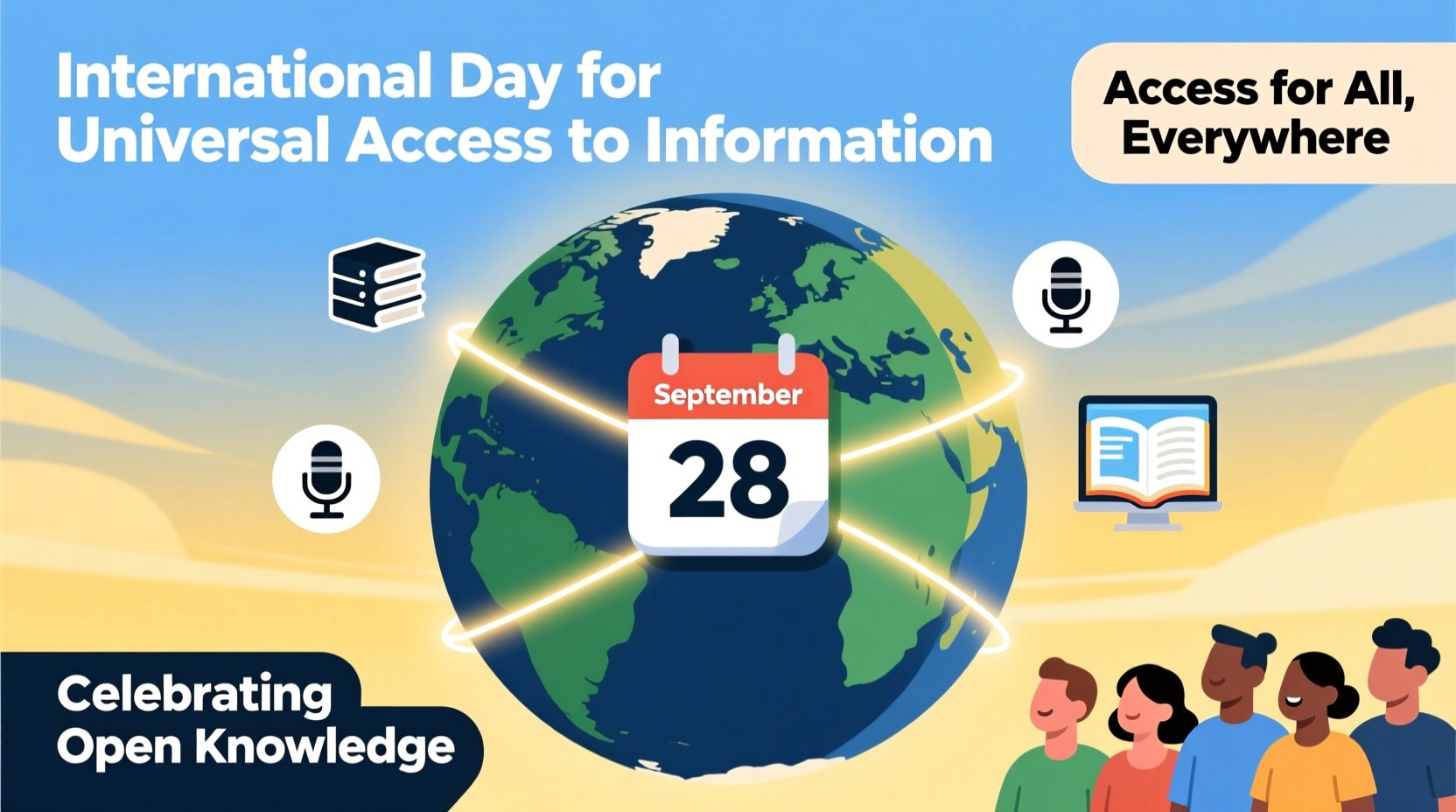
The International Day for Universal Access to Information (IDUAI), observed annually on September 28, stands as a cornerstone in the global pursuit of transparency, accountability, and inclusive development. Recognized by the United Nations through Resolution A/RES/74/5, this day emphasizes that access to information is not a privilege but a fundamental human right essential for democratic governance, public participation, and sustainable progress 📚.
In an era defined by digital transformation and information overload, ensuring equitable access to reliable, timely, and understandable data has never been more critical. From empowering marginalized communities to strengthening civic engagement and enabling informed decision-making, universal access to information serves as a catalyst for social justice and innovation 💡.
This article explores the significance of the International Day for Universal Access to Information, its historical roots, objectives, global impact, and how governments, civil society, and individuals can contribute to building open, informed societies worldwide.
The journey toward recognizing universal access to information as a human right has deep historical roots. While early legal frameworks such as Sweden’s Freedom of the Press Act of 1766 laid foundational principles, it wasn’t until the late 20th and early 21st centuries that international consensus began to solidify around this principle.
A pivotal moment came with the adoption of UNESCO’s 2015 Recommendation on Open Educational Resources (OER) and the broader push within the 2030 Agenda for Sustainable Development. Specifically, Sustainable Development Goal 16.10 calls for ensuring public access to information and protecting fundamental freedoms — a clear mandate for global action.
In response, the United Nations General Assembly adopted Resolution A/RES/74/5 on November 20, 2019, officially designating September 28 as the International Day for Universal Access to Information. This resolution built upon earlier advocacy led by organizations like the World Congress on Freedom of Expression and Information and UNESCO’s long-standing support for press freedom and knowledge equity.
The date itself — September 28 — was originally established in 2002 by the African Information Ministers as Africa Freedom of Information Day, symbolizing regional leadership in advancing transparency across the continent. Its elevation to a UN observance reflects growing recognition of information as a cross-cutting enabler of all development goals 🌐.
The core purpose of the International Day for Universal Access to Information is threefold:
Access to information directly influences key areas such as health, education, disaster preparedness, anti-corruption efforts, and climate resilience. For example:
| Area | Impact of Access to Information |
|---|---|
| Public Health | Timely dissemination of medical guidelines during pandemics improves outcomes 🩺 |
| Education | Open educational resources reduce barriers to learning globally 📚 |
| Environmental Protection | Citizens use environmental data to hold polluters accountable 🌱 |
| Democratic Governance | Free flow of information strengthens electoral integrity and oversight 🗳️ |
| Economic Development | Entrepreneurs access market data, regulations, and funding opportunities 💼 |
Moreover, countries with strong access-to-information laws tend to rank higher on indices measuring governance quality, rule of law, and citizen trust. According to UNESCO, over 120 nations now have some form of freedom of information legislation — though implementation remains uneven, particularly in conflict-affected or authoritarian contexts.
The IDUAI also highlights emerging challenges in the digital age: disinformation, algorithmic bias, surveillance, and the digital divide. Bridging these gaps requires not only policy reform but investment in digital literacy, infrastructure, and inclusive design.
Each year on September 28, governments, NGOs, media outlets, academic institutions, and grassroots organizations host events ranging from policy forums and hackathons to public exhibitions and school campaigns. These activities aim to raise awareness, assess national progress, and advocate for stronger legal protections.
Notable examples include:
UNESCO plays a central coordinating role, often launching flagship reports, issuing statements from the Director-General, and supporting capacity-building initiatives in low-income countries. In recent years, themes have focused on “Access to Information and Law Reform”, “Technology, Law and Equality”, and “Democracy, Development and Access to Information” — reflecting evolving priorities.
Digital platforms amplify reach: hashtags like #AccessToInfoDay trend globally, while virtual conferences enable cross-border dialogue. Youth-led movements increasingly leverage social media to demand transparency in education, climate policy, and governance.
The International Day for Universal Access to Information is far more than a symbolic observance — it is a vital reminder that knowledge is power, and that power must be shared equitably. In a world where misinformation spreads faster than facts and where millions remain disconnected from essential services due to lack of information, this day calls for urgent, collective action.
By upholding the right to access information, we strengthen democracy, foster innovation, protect human rights, and accelerate progress toward the Sustainable Development Goals. Whether you are a policymaker drafting transparency legislation, a teacher educating students about digital citizenship, or a citizen filing a request for public data, your role matters.
We urge readers to learn more about how they can support this cause and stay informed about global developments. Visit the official United Nations page for the International Day for Universal Access to Information at https://www.un.org/en/observances/information-access-day to explore resources, event listings, and ways to get involved. Together, we can build a future where everyone, everywhere, has the right and ability to know 🔍.