Address
304 North Cardinal St.
Dorchester Center, MA 02124
Work Hours
Monday to Friday: 7AM - 7PM
Weekend: 10AM - 5PM
Address
304 North Cardinal St.
Dorchester Center, MA 02124
Work Hours
Monday to Friday: 7AM - 7PM
Weekend: 10AM - 5PM


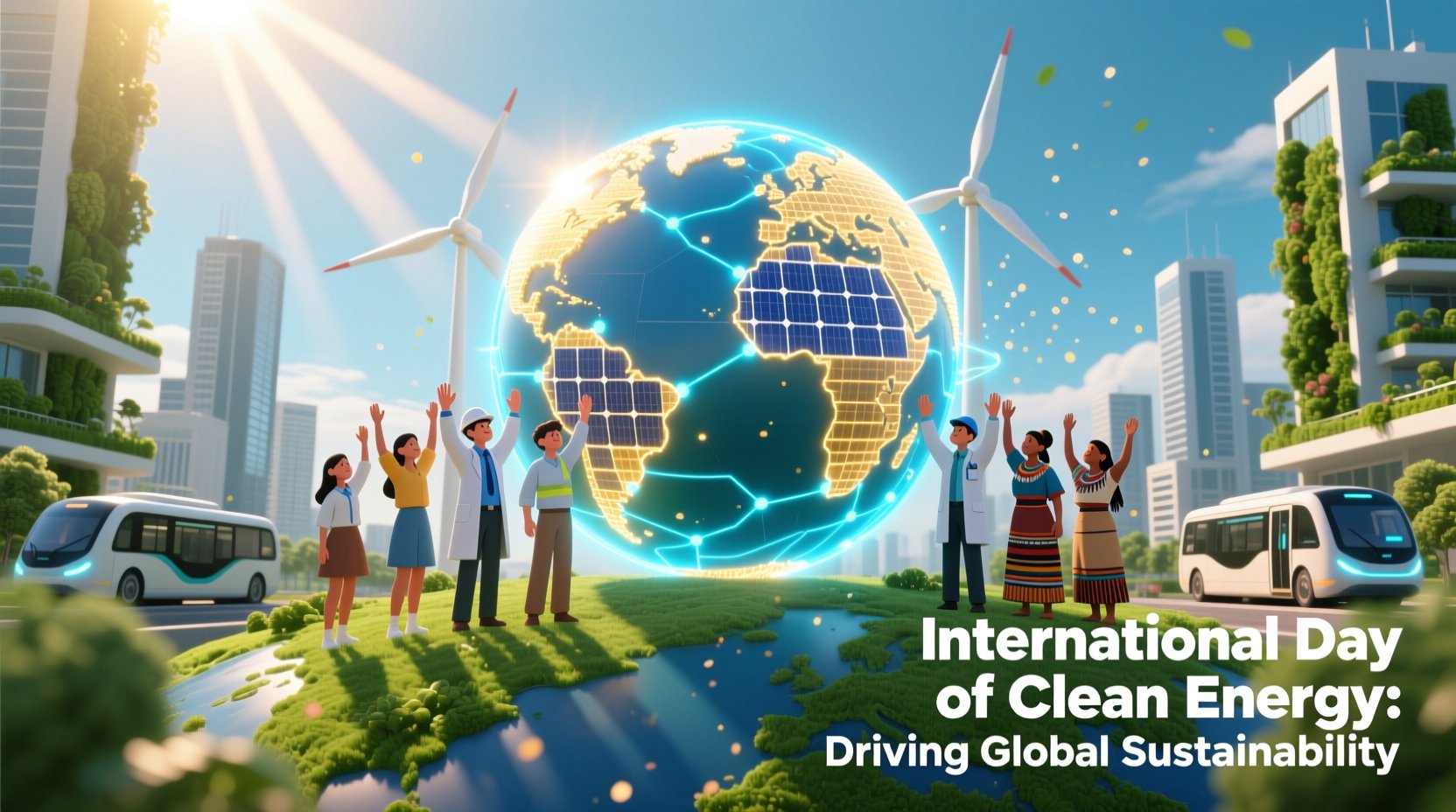
The International Day of Clean Energy, observed annually on January 26, stands as a powerful global reminder of humanity’s shared responsibility to transition toward sustainable, accessible, and renewable energy sources. Established by the United Nations General Assembly through Resolution A/RES/77/327 in December 2022, this day marks a pivotal moment in the world’s collective effort to combat climate change, reduce carbon emissions, and ensure energy equity for all. As nations grapple with rising temperatures, extreme weather events, and growing energy demands, the importance of clean energy has never been more urgent. This observance not only highlights technological advancements but also emphasizes policy innovation, international cooperation, and grassroots action.✨
The journey toward establishing the International Day of Clean Energy reflects decades of scientific consensus, environmental advocacy, and diplomatic momentum. The roots of this initiative can be traced back to key milestones such as the Paris Agreement (2015), which set ambitious targets to limit global warming to well below 2°C above pre-industrial levels. Central to achieving these goals is the transformation of global energy systems—currently responsible for over 75% of global greenhouse gas emissions.
In recognition of this imperative, the United Nations has long championed sustainable energy through initiatives like Sustainable Development Goal 7 (SDG 7): “Ensure access to affordable, reliable, sustainable and modern energy for all.” Despite progress, nearly 675 million people worldwide still lack access to electricity, primarily in sub-Saharan Africa and parts of South Asia. Additionally, 2.3 billion rely on harmful fuels like wood, coal, or kerosene for cooking, contributing to indoor air pollution and health risks.
The formal adoption of A/RES/77/327 on December 20, 2022, marked a turning point. Spearheaded by the Kingdom of Morocco and supported by over 70 co-sponsoring countries, the resolution declared January 26 as the official date for the International Day of Clean Energy. This date was chosen to commemorate Morocco’s leadership in solar energy innovation, particularly its Noor Ouarzazate Solar Complex—one of the largest concentrated solar power plants in the world.
| Year | Event | Significance |
|---|---|---|
| 2011 | UN General Assembly declares “Sustainable Energy for All” initiative | Laid foundation for global energy access goals |
| 2015 | Adoption of SDG 7 and Paris Agreement | Integrated clean energy into global development framework |
| 2021 | High-Level Dialogue on Energy convened by UN Secretary-General | Mobilized $600+ billion in commitments for energy transition |
| 2022 | Adoption of Resolution A/RES/77/327 | Established International Day of Clean Energy |
The primary purpose of the International Day of Clean Energy is threefold: to raise awareness about the critical role of renewable energy in addressing climate change, to accelerate investment and innovation in clean technologies, and to promote inclusive energy policies that leave no one behind. Unlike fossil fuels, which are finite and environmentally destructive, clean energy sources—such as solar, wind, hydro, geothermal, and green hydrogen—offer scalable, low-carbon alternatives capable of powering homes, industries, and transportation systems sustainably.
One of the most significant impacts of this international day is its ability to galvanize action across sectors. Governments use the occasion to announce new policies, such as phasing out coal-fired power plants or expanding subsidies for rooftop solar installations. Businesses showcase breakthroughs in battery storage, smart grids, and electric mobility. Civil society organizations host educational campaigns, youth forums, and community workshops to foster public engagement.
Beyond statistics, the day fosters a cultural shift—encouraging individuals to consider their energy choices, from installing solar panels to supporting green utilities. It also shines a spotlight on energy justice, ensuring that vulnerable populations, including women, indigenous communities, and low-income households, benefit equitably from the energy transition.
Since its inception, the International Day of Clean Energy has inspired widespread participation across continents. From government-led summits to school science fairs, the event unites diverse stakeholders under a common vision: a world powered by clean, safe, and universally available energy.
In 2023, the inaugural observance featured high-level events at UN headquarters in New York, regional conferences in Nairobi and Bangkok, and virtual roundtables connecting experts from over 120 countries. Educational institutions integrated clean energy topics into curricula, while tech companies launched open-source platforms for monitoring renewable energy performance.
| Country/Region | Initiative | Impact |
|---|---|---|
| Germany | National “Energiewende” (Energy Transition) Program | Renewables accounted for 52% of electricity mix in 2023 |
| India | International Solar Alliance Leadership | Installed over 70 GW of solar capacity; targeting 500 GW by 2030 |
| Africa Union | Africa Renewable Energy Initiative (AREI) | Mobilizing $20 billion for clean energy projects across 20 countries |
| United States | Department of Energy’s Clean Energy Education Campaign | Reaching 10,000 schools with STEM-based energy literacy programs |
Youth engagement has been particularly strong, with movements like Fridays for Future and UN Youth Climate Champions organizing rallies, hackathons, and social media campaigns using hashtags like #CleanEnergyDay and #PowerTheFuture. These efforts amplify the message that the energy transition is not just a technical challenge but a moral imperative.
Private sector involvement has also surged. Multinational corporations including Google, Apple, and IKEA have committed to 100% renewable operations, while financial institutions like the World Bank and European Investment Bank prioritize lending for clean energy infrastructure.
The International Day of Clean Energy is far more than a symbolic gesture—it is a catalyst for systemic change. By uniting governments, businesses, scientists, educators, and citizens around a shared mission, it accelerates progress toward a resilient, equitable, and sustainable energy future. As climate threats intensify and energy demands grow, the need for bold, coordinated action has never been greater. This annual observance reminds us that clean energy is not a luxury, but a necessity for planetary survival and human prosperity.
Every individual has a role to play—whether by advocating for clean energy policies, adopting energy-efficient practices, or supporting innovations that drive the transition forward. To learn how you can get involved, explore resources, and stay updated on global initiatives, visit the official United Nations page for the International Day of Clean Energy. Together, we can build a world where energy powers progress without compromising the planet. ⚡️♻️