Address
304 North Cardinal St.
Dorchester Center, MA 02124
Work Hours
Monday to Friday: 7AM - 7PM
Weekend: 10AM - 5PM
Address
304 North Cardinal St.
Dorchester Center, MA 02124
Work Hours
Monday to Friday: 7AM - 7PM
Weekend: 10AM - 5PM


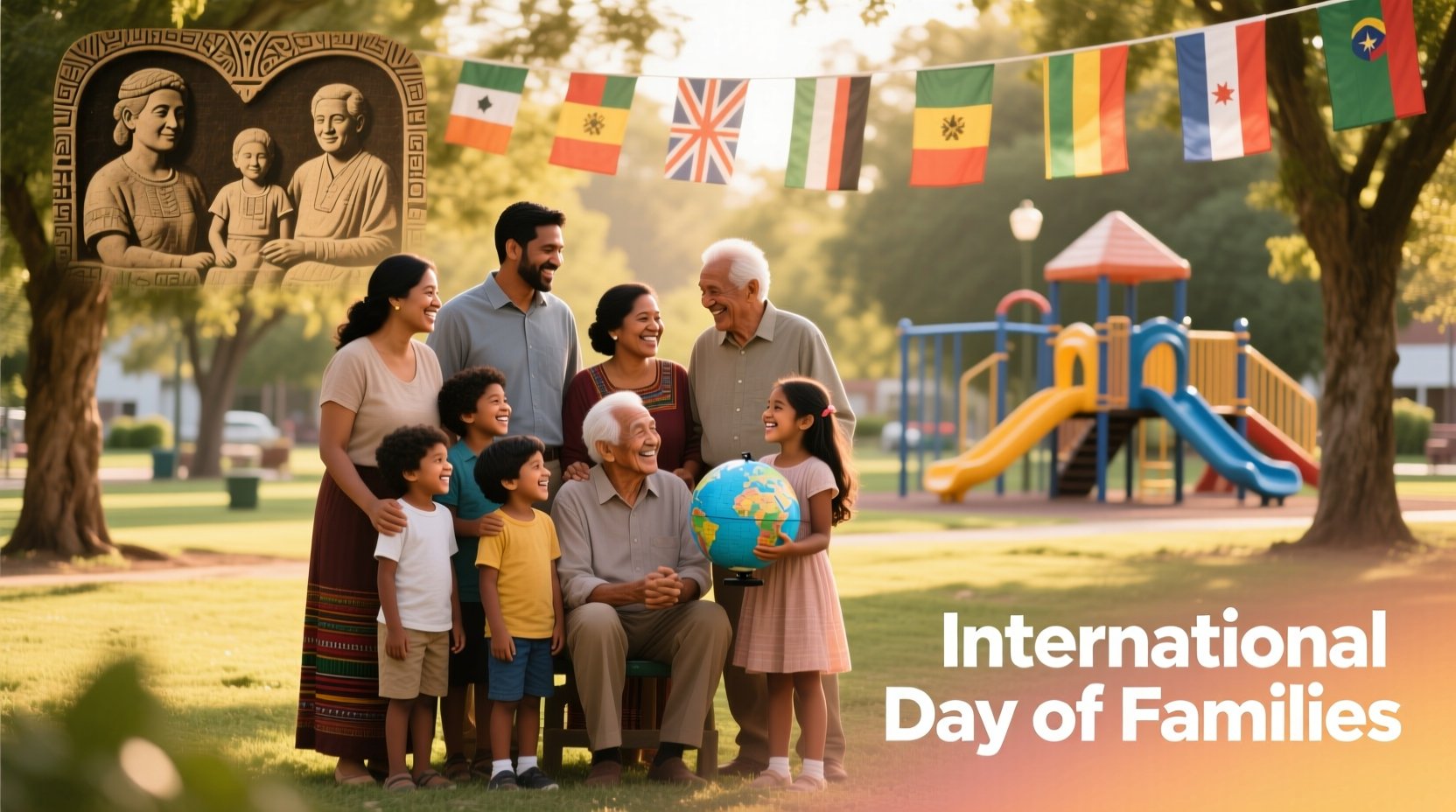
The International Day of Families, observed annually on May 15, stands as a powerful global reminder of the foundational role families play in social development, emotional well-being, and cultural continuity. 🌍 This United Nations-designated day was established to highlight the importance of families as basic units of society and to promote policies that strengthen family structures worldwide. With rising challenges such as migration, urbanization, economic inequality, and shifting social norms, the need to support families has never been more urgent. The official recognition of this day under UN Resolution A/RES/47/237 underscores a shared international commitment to fostering inclusive, resilient, and supportive family environments.
Each year, the International Day of Families adopts a unique theme, addressing contemporary issues like digital inclusion, intergenerational solidarity, work-life balance, and mental health within family dynamics. These themes not only reflect evolving societal trends but also guide policymakers, educators, NGOs, and individuals in creating meaningful change. By focusing on families, the UN acknowledges that sustainable development begins at home — in the relationships, values, and care systems nurtured within family units.
The formal establishment of the International Day of Families traces back to December 1993, when the United Nations General Assembly adopted Resolution A/RES/47/237. This landmark decision emerged from the broader framework of the International Year of the Family (1994), which aimed to raise awareness about demographic, social, and economic trends affecting families globally. The resolution invited governments, UN agencies, civil society organizations, and individuals to observe May 15 as a dedicated day to reflect on family-related issues and promote family-centered policies.
The choice of families as a focal point was strategic. Families are universally recognized as primary agents of socialization, where children learn language, values, empathy, and responsibility. They serve as first responders during crises, provide emotional and financial support, and transmit cultural heritage across generations. However, by the early 1990s, rapid globalization and socio-political changes were placing unprecedented pressure on traditional and non-traditional family forms alike. Issues such as single-parent households, aging populations, gender roles, and access to education and healthcare demanded coordinated global attention.
The creation of this observance marked a pivotal moment in international policy-making, emphasizing that family well-being is not a private matter but a public good essential for peace, stability, and progress. Over three decades later, the day continues to evolve, responding dynamically to emerging challenges through research, advocacy, and grassroots engagement.
The core purpose of the International Day of Families is twofold: to raise awareness about the changing nature of family life and to encourage action that supports healthy, inclusive, and resilient family units. Each annual theme acts as a lens through which global stakeholders can examine specific aspects of family well-being. For instance:
These themes directly align with the United Nations Sustainable Development Goals (SDGs), particularly Goal 3 (Good Health and Well-being), Goal 5 (Gender Equality), Goal 10 (Reduced Inequalities), and Goal 11 (Sustainable Cities and Communities). By linking family welfare to broader development objectives, the observance reinforces the idea that no goal can be achieved without strong, supported families at the center.
One significant impact of the day is its ability to influence national policies. Countries like Sweden, Canada, and Costa Rica have used insights from the International Day of Families to reform parental leave laws, expand childcare infrastructure, and improve elder care programs. Additionally, academic institutions and think tanks publish research reports around this date, contributing valuable data on family economics, child development, and intergenerational mobility.
| Year | Theme | Key Focus Area |
|---|---|---|
| 2023 | Families and Climate Action | Environmental stewardship at household level |
| 2022 | Families and Urbanization | Housing, transportation, community design |
| 2021 | Families in a Digital World | Digital literacy, online safety, connectivity |
| 2020 | Families in Development | Role in achieving SDGs |
| 2019 | Families and Healthy Lifestyles | Nutrition, physical activity, mental wellness |
The strength of the International Day of Families lies in its truly global reach. From government-led campaigns in Japan to school-based events in Kenya, communities across six continents come together each May 15 to celebrate, educate, and advocate. UNESCO, UNICEF, WHO, and other specialized agencies collaborate with local partners to organize webinars, art exhibitions, storytelling sessions, and intergenerational dialogues.
In Latin America, countries like Argentina and Colombia host “Family Days” in public parks, offering free health screenings, legal counseling, and parenting workshops. In Europe, cities such as Vienna and Barcelona integrate the day into urban planning forums, ensuring that new housing developments include family-friendly spaces. Meanwhile, in South Asia, NGOs use radio broadcasts and mobile vans to reach rural families with information on nutrition, reproductive health, and domestic violence prevention.
Social media amplifies these efforts significantly. Hashtags like #InternationalDayOfFamilies, #StrongFamiliesStrongWorld, and #FamilyFirst trend globally, enabling personal stories to go viral and spark wider conversations. Influencers, educators, and even celebrities share messages of gratitude, resilience, and unity, reinforcing the emotional resonance of the day.
Crucially, the observance embraces diversity in family forms — recognizing nuclear families, extended clans, adoptive households, same-sex parents, child-headed families, and single-person homes as equally valid and deserving of support. This inclusivity ensures that no one is left behind in the pursuit of family well-being.
The International Day of Families is far more than a symbolic gesture; it is a vital platform for driving real, measurable change in how societies value and support their most fundamental unit. 🏡 As we face complex global challenges — from climate disruption to digital transformation — investing in families remains one of the most effective strategies for building compassionate, equitable, and sustainable communities.
By promoting dialogue, shaping policy, and inspiring action, this annual observance reminds us that every family, regardless of structure or background, contributes to the fabric of humanity. It calls on governments to prioritize family-sensitive legislation, on businesses to offer flexible work arrangements, and on individuals to nurture empathy and connection within their own homes.
To learn more about upcoming themes, past initiatives, and ways you can get involved, visit the official United Nations page for the International Day of Families. Whether you’re an educator, policymaker, parent, or concerned global citizen, your participation matters. Together, we can ensure that families everywhere receive the recognition, resources, and respect they deserve. 💙