Address
304 North Cardinal St.
Dorchester Center, MA 02124
Work Hours
Monday to Friday: 7AM - 7PM
Weekend: 10AM - 5PM
Address
304 North Cardinal St.
Dorchester Center, MA 02124
Work Hours
Monday to Friday: 7AM - 7PM
Weekend: 10AM - 5PM


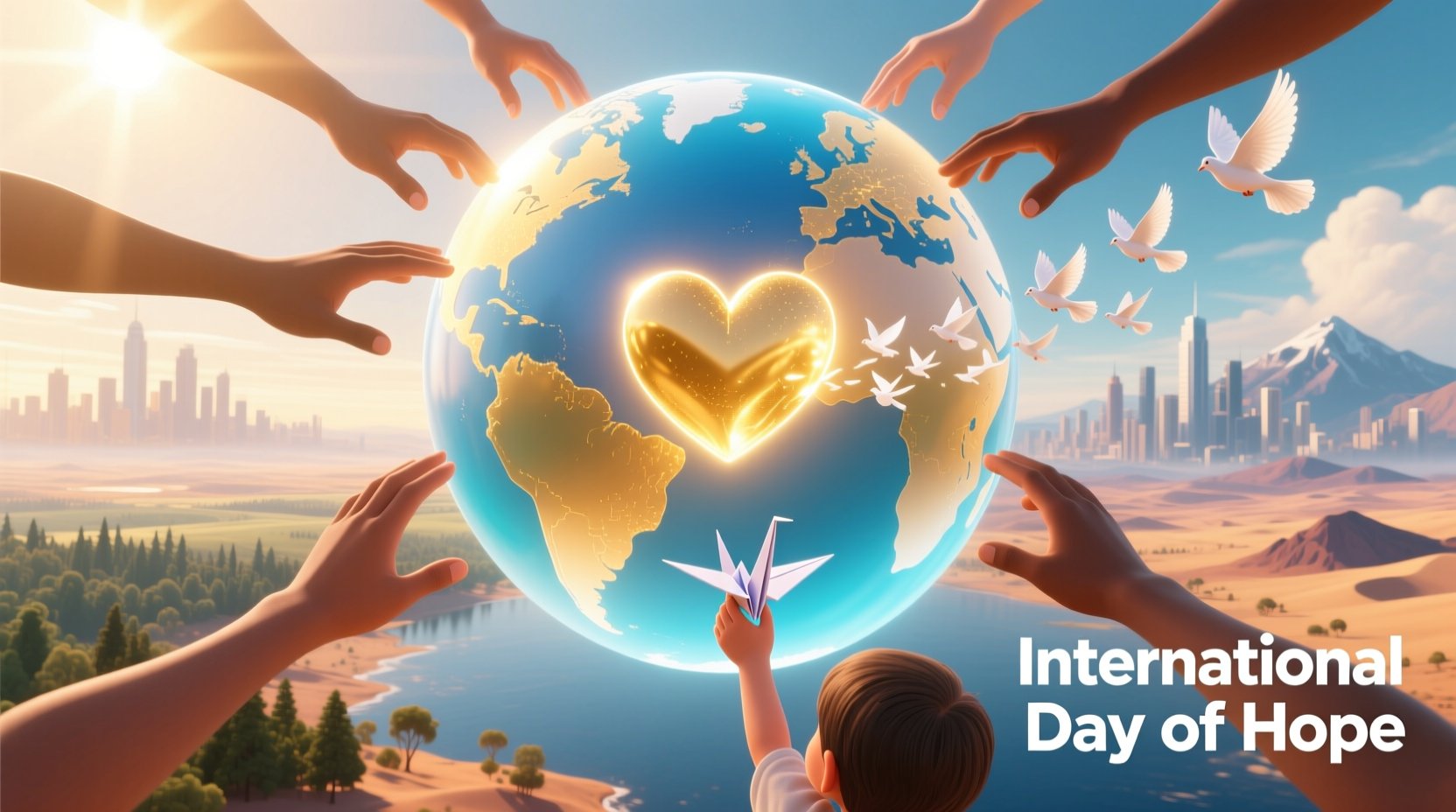
The International Day of Hope, observed annually on January 23, stands as a powerful testament to the enduring spirit of human resilience and collective aspiration. 🌍 Proclaimed by the United Nations General Assembly through Resolution A/RES/79/270, this global observance invites individuals, communities, governments, and organizations worldwide to reflect on the transformative power of hope in overcoming adversity, fostering peace, and advancing sustainable development. More than just an abstract ideal, hope is recognized by the UN as a vital force that drives action, inspires innovation, and strengthens solidarity across borders.
In a world increasingly shaped by complex challenges—from climate change and conflict to inequality and mental health crises—the need for hope has never been more urgent. This day serves not only as a moment of reflection but also as a catalyst for meaningful engagement. It encourages people from all walks of life to recommit to values of compassion, perseverance, and unity. By officially recognizing hope as a universal principle worthy of celebration, the United Nations affirms its belief that even in the darkest times, a shared vision for a better future can guide humanity forward. 💡
The formal establishment of the International Day of Hope traces back to December 2024, when the UN General Assembly adopted Resolution A/RES/79/270. This landmark decision followed years of advocacy from civil society groups, youth movements, faith-based organizations, and mental health advocates who emphasized the psychological, social, and political importance of cultivating hope in public discourse and policy-making.
The resolution was introduced with broad cross-regional support, reflecting a growing consensus that emotional and spiritual well-being are integral to achieving the Sustainable Development Goals (SDGs). While previous international days have focused on specific issues such as peace, health, or education, the International Day of Hope takes a holistic approach—recognizing that progress in any area depends fundamentally on people’s belief that change is possible.
The choice of January 23 as the annual date is symbolic. Falling early in the calendar year, it aligns with a time when many cultures engage in renewal, goal-setting, and reflection—making it an ideal moment to reignite personal and collective aspirations. Moreover, placing this observance shortly after Human Rights Day (December 10) and International Migrants Day (December 18) creates a thematic arc emphasizing dignity, resilience, and the right to dream of a better life.
The core purpose of the International Day of Hope is threefold: to inspire, to empower, and to mobilize. 🌱 At its heart, the day seeks to shift narratives from despair to agency, reminding individuals and institutions alike that transformation begins with belief.
Research in psychology and behavioral economics consistently shows that hopeful individuals are more likely to take proactive steps toward their goals, exhibit greater resilience in the face of setbacks, and contribute positively to their communities. On a societal level, widespread hope correlates with increased civic participation, lower levels of violence, and stronger social cohesion.
Within the framework of the UN’s 2030 Agenda, hope functions as both a precondition and an outcome of sustainable development. For example:
| SDG Area | Role of Hope |
|---|---|
| Poverty Eradication (SDG 1) | Hope motivates individuals to pursue education, training, and entrepreneurship opportunities. |
| Climate Action (SDG 13) | Hope fuels long-term environmental stewardship and community-led adaptation initiatives. |
| Mental Health & Well-being (SDG 3) | Cultivating hope reduces anxiety, depression, and suicide rates, especially among youth. |
| Peace & Justice (SDG 16) | Hope supports reconciliation processes and trust-building in post-conflict societies. |
| Quality Education (SDG 4) | Students who believe in their futures are more engaged and persistent in learning. |
Beyond individual behavior, the International Day of Hope influences policy design. Governments and NGOs are increasingly integrating ‘hope indicators’ into well-being metrics, tracking sentiments like optimism, sense of control, and future orientation alongside traditional economic data.
Since its inception, the International Day of Hope has sparked diverse and creative expressions across continents. From school assemblies in rural Kenya to digital art campaigns in South Korea, millions participate each year in ways that honor local culture while affirming global unity.
Common activities include:
Notably, the UN Department of Global Communications coordinates an annual theme—such as “Hope in Action,” “Voices of Tomorrow,” or “Healing Hearts, Building Futures”—to provide coherence and focus. These themes help align grassroots efforts with broader advocacy goals, including refugee integration, climate justice, and gender equality.
Corporate and technological partners also play a growing role. Tech companies have launched AI-driven chatbots offering motivational messages in multiple languages, while brands sponsor公益 campaigns that link consumer actions to donations for mental health programs.
The International Day of Hope is far more than a symbolic gesture—it is a call to action rooted in the understanding that hope is not passive wishing, but active believing. ✨ In recognizing this day, the United Nations affirms that emotional and moral dimensions of life are inseparable from material progress. Whether facing personal struggles or global emergencies, the ability to envision a better tomorrow remains one of humanity’s most powerful tools.
As we observe January 23 each year, let us remember that hope thrives not in isolation, but through connection, courage, and commitment. It grows when we listen to survivors, uplift marginalized voices, invest in mental health, and create inclusive societies where everyone can see themselves in the future.
To learn more about how you can get involved, explore educational resources, or access official statements and events, visit the United Nations’ dedicated page for this inspiring observance: International Day of Hope. Join the global movement—because when we choose hope, we choose humanity.❤️