Address
304 North Cardinal St.
Dorchester Center, MA 02124
Work Hours
Monday to Friday: 7AM - 7PM
Weekend: 10AM - 5PM
Address
304 North Cardinal St.
Dorchester Center, MA 02124
Work Hours
Monday to Friday: 7AM - 7PM
Weekend: 10AM - 5PM


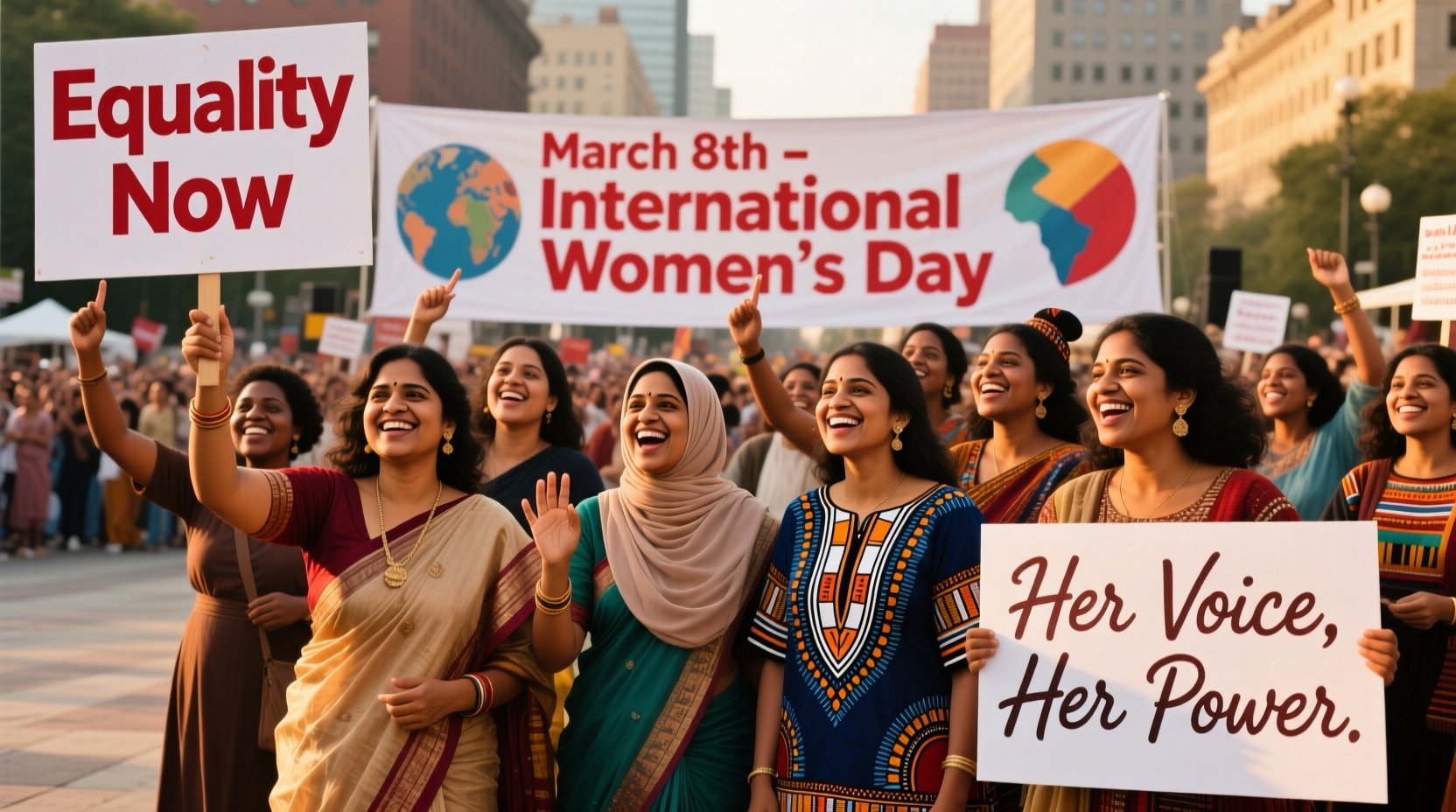
Every year on March 8, the world unites to observe International Women’s Day — a global movement dedicated to gender equality, women’s rights, and the recognition of women’s achievements across every sphere of life. 🌍 This annual commemoration is more than just a day on the calendar; it is a powerful catalyst for change, reflection, and action. Sponsored by the United Nations, International Women’s Day serves as both a celebration of progress and a call to accelerate efforts toward true gender parity. From grassroots activism to corporate boardrooms and government policies, this day amplifies voices that have long been marginalized and honors the trailblazing contributions of women worldwide.
With the official UN theme often changing each year — such as “DigitALL: Innovation and Technology for Gender Equality” or “Embrace Equity” — the focus remains consistent: dismantling systemic barriers, challenging stereotypes, and empowering women and girls in all their diversity. As we explore the depth and significance of this pivotal event, it becomes clear that International Women’s Day 2024 is not merely symbolic but a vital platform for driving sustainable development, social justice, and inclusive growth.
The origins of International Women’s Day trace back over a century, rooted in labor movements and early feminist activism at the turn of the 20th century. One of the earliest precursors occurred in 1908, when 15,000 women marched through New York City demanding shorter working hours, better pay, and the right to vote. 👩🏭 This momentum led to the first National Woman’s Day, observed in the United States in 1909.
The idea of an international observance gained traction quickly. In 1910, at the International Conference of Working Women in Copenhagen, Clara Zetkin, a German socialist and feminist, proposed establishing an annual International Women’s Day to advocate for women’s suffrage and labor rights. Her proposal was unanimously approved by over 100 women from 17 countries. The first official International Women’s Day was celebrated on March 19, 1911, in Austria, Denmark, Germany, and Switzerland, drawing more than one million people into rallies and public forums.
Tragedy also played a role in shaping collective memory. Though often mistakenly cited as the origin, the 1911 Triangle Shirtwaist Factory fire in New York — which killed 146 garment workers, mostly young immigrant women — intensified calls for safer working conditions and labor reforms, further fueling the women’s movement. Over time, March 8 emerged as the fixed date, especially after Soviet Russia declared it an official holiday in 1917 following women’s strikes for “bread and peace” during World War I.
The United Nations formally recognized International Women’s Day in 1975, declaring it International Women’s Year. Since then, it has become a cornerstone of global advocacy, aligning with key frameworks like the Beijing Declaration and Platform for Action (1995) and Sustainable Development Goal 5 (Gender Equality).
The central purpose of International Women’s Day is to promote gender equality, recognize women’s achievements, and advocate for accelerated change in areas where disparities persist. Whether in education, healthcare, political representation, economic participation, or freedom from violence, the day shines a spotlight on both progress made and challenges ahead.
Each year, the United Nations sets a theme that guides global discourse. Recent themes include:
| Year | UN Theme | Focus Area |
|---|---|---|
| 2024 | Invest in Women: Accelerate Progress | Economic empowerment and funding for women-led initiatives |
| 2023 | DigitALL: Innovation and Technology for Gender Equality | Bridging the digital gender divide |
| 2022 | Gender Equality Today for a Sustainable Tomorrow | Climate action and women’s leadership |
| 2021 | Women in Leadership: Achieving an Equal Future in a COVID-19 World | Representation during global crises |
The impact of these themes is tangible. For example, the 2023 focus on technology spurred global campaigns to increase girls’ access to STEM education and close the gender gap in tech employment. Organizations like UNESCO and UN Women launched mentorship programs, coding boot camps, and policy dialogues to support digital inclusion.
Moreover, International Women’s Day influences legislation and corporate practices. Many governments announce new policies on equal pay or parental leave around March 8. Companies use the occasion to audit their diversity metrics, launch mentorship schemes, and commit to inclusive hiring. NGOs leverage the heightened media attention to spotlight issues like child marriage, femicide, and workplace harassment.
One of the most remarkable aspects of International Women’s Day is its universal reach. It is celebrated in over 150 countries, transcending cultural, political, and socioeconomic boundaries. While some nations observe it as a public holiday — including Russia, China, Vietnam, and Uganda — others mark it through events, educational programs, and media campaigns.
In Europe, cities like London, Berlin, and Stockholm host large-scale marches and panel discussions featuring female leaders, activists, and artists. 🎤 In Africa, grassroots organizations use the day to advocate for maternal health, girls’ education, and legal reform. In Latin America, Día Internacional de la Mujer is often linked to protests against gender-based violence, with vibrant demonstrations in Mexico City, Buenos Aires, and Santiago.
Social media plays a crucial role in modern celebrations. Hashtags like #IWD2024, #InvestInWomen, and #EachforEqual go viral, enabling individuals to share personal stories, amplify advocacy messages, and connect across borders. Virtual conferences, webinars, and live streams make participation accessible to millions who might otherwise be excluded.
Corporate engagement has also grown significantly. Major brands from Apple to Unilever run special campaigns highlighting women employees, customers, or entrepreneurs. Some companies donate a portion of sales to women’s charities, while others pledge internal reforms to advance equity.
Notably, the United Nations hosts an official International Women’s Day observance at its headquarters in New York, bringing together dignitaries, UN officials, and civil society leaders. Similar events take place in regional UN offices, reinforcing the organization’s commitment to gender mainstreaming.
International Women’s Day is not just a moment to celebrate; it is a movement to transform. 🌟 Despite significant progress over the past century, gender inequality persists in alarming ways. According to UN Women, no country has achieved full gender equality, and at the current pace, it could take another 300 years to close the global gender gap. Women still earn less, hold fewer leadership positions, and face disproportionate risks of violence and poverty.
This is why International Women’s Day remains essential. It reminds us that equality is not inevitable — it must be fought for, funded, and institutionalized. It empowers individuals to challenge bias, organizations to adopt equitable practices, and governments to enact inclusive policies. Every march, every speech, every social media post contributes to a broader cultural shift.
As we reflect on the legacy and future of this vital observance, let us recommit to the principles it stands for: justice, dignity, and opportunity for all women and girls. You can join the global movement by learning more, sharing stories, supporting women-led initiatives, and advocating for change in your community.
To stay informed about upcoming themes, events, and ways to get involved, visit the official United Nations International Women’s Day page. Together, we can build a world where gender equality is not just a dream, but a reality. 💪✨