Address
304 North Cardinal St.
Dorchester Center, MA 02124
Work Hours
Monday to Friday: 7AM - 7PM
Weekend: 10AM - 5PM
Address
304 North Cardinal St.
Dorchester Center, MA 02124
Work Hours
Monday to Friday: 7AM - 7PM
Weekend: 10AM - 5PM


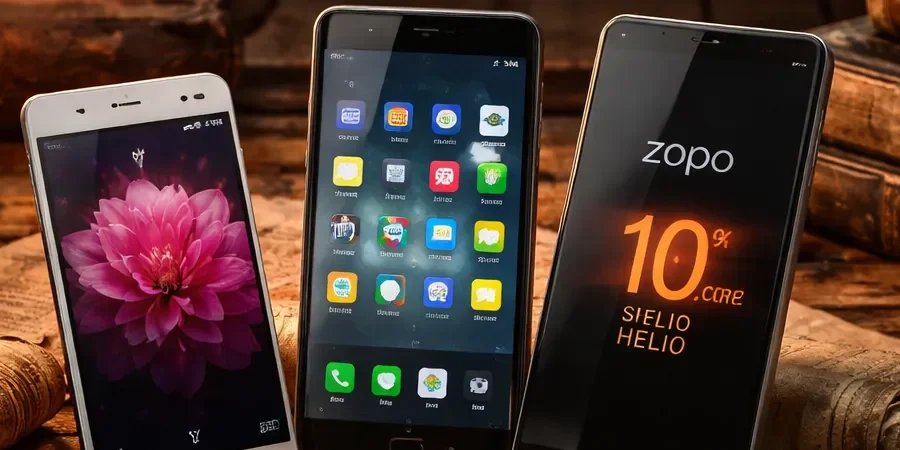
Before Xiaomi ruled the price charts. Before Realme launched a phone, every time you blinked. Before Chinese smartphone brands had global keynotes and dramatic background music, there was a different era, a chaotic one, an interesting one.
This era felt less like a market and more like a side quest on a sketchy Android forum at 2 a.m. This was the First Age of Chinese smartphones. Full of names that we barely remember nowadays. Some of the heroes and anti-heroes were names people barely remember now: Zopo, Jiayu, and iOcean. Say those in a modern phone store and someone might think you’re crazy or come from another planet.
Back in 2013-2015, Apple and Samsung felt untouchable with their flagships. Everything else was either overpriced or underpowered. I’m not kidding, nowadays we have mid-range phones with OLED displays and powerful 5G chips. Ten years ago, we had a device like the Galaxy Y. In these years when good smartphones were barely accessible to those who couldn’t pay a fortune, these brands showed up like they had found a cheat code.
Quad-core and Octa-Core processors, when that still sounded illegal. 2GB of RAM or 3GB of RAM when big brands were acting like 1GB was enough for humanity. Huge screens, Dual SIM, and Big replaceable batteries. All for prices that made you question reality. Sometimes these devices were magical, but in other times the low price also revealed their weakness. In the end, devices from these brands were still very good and served well some users like me, who had the Jiayu S3 as a daily driver for nearly three years.
Their Software could be weird. Translations looked like they came from a fever dream. Buying one meant importing from a website that looked like it sold both phones and mystery vitamins. And still, people loved them.
Zopo was the brand that kept trying stuff early. Full HD displays before it was normal before. Large screens, before everyone pretended they always liked big phones. On paper, Zopo devices often looked ridiculous for the price. In real life, performance could be a bit of a lottery. Sometimes smooth. Sometimes, thinking deeply about its life choices.
But Zopo helped prove a huge point. People did not care about brand prestige if the hardware was strong and the price made sense. That idea shaped the entire industry later.
Sometimes Zopo delivered, in others – it disappointed with bad camera performance. However, their devices were still decent considering what we had in other pricing segments. The brand always tried to delvier the feeling that it was a big one.
Jiayu had a different energy. Less flashy, more practical. Big batteries, when most phones died before dinner. Solid builds and thick bodies that felt like you could use the phone to fix a door hinge.
Jiayu phones felt like tools. You bought one because you wanted endurance, not glamour. In enthusiast circles, the brand had real respect. It was never mainstream cool, but it was forum cool, and that meant something. Today’s battery-focused mid-rangers owe a quiet debt to that mindset.
In the early era of Chinese brands, Jiayu was among the most reliable. Their devices were rock solid and built with extreme quality. The Jiayu S3, for example, was a beast, and despite its success, we believe that the quality employed in this project threw the brand into bankruptcy.
The Jiayu S3 probably had more than a thousand users across the world, being maintained by custom ROM developers. The device originally launched with Android KitKat and was updated by an independent team until Android 8.1 Oreo. Until 2024, I could see people talking in its dedicated forum on XDA-Developers. This was quite a feat for a phone from a shady Chinese brand.
If Zopo experimented and Jiayu endured, iOcean flexed numbers. It delivered identity with beautiful designs, and Bigger specs everywhere. The whole strategy was simple. Why pay more when this thing has bigger numbers? The problem showed up later. Specs alone do not make a great experience—optimization matters. Cameras need tuning. Software needs polish. That part was not always there.
Still, for a while, iOcean felt like the future. Devices like the iOcean X7 were considered masterpieces back then. Unfortunately, this was the most succesful phone from iOcean and also the last to get this level of attention.
The idea behind these phones did not fail, but the world changed. Bigger Chinese smartphone brands have learned from these pioneers. Then they added design, software polish, marketing muscle, and global logistics. Xiaomi and others took the same core formula and scaled it properly.
Zopo, Jiayu, and iOcean were built for a scrappy internet-driven market. First, we had the knockoff Chinese smartphones, made simply to copy the iPhone or Galaxy devices. Then, these brands came to show some original quality. Later, the big ones like Xiaomi, Oppo, and Vivo showed all the power they had and crushed the small competitors.
Brands like Zopo, Jiayu, and iOcean, were not ready for carrier deals, worldwide launches, and billion dollar competition. But still, they walked so the giants could run.
These brands are gone, but their spirit is everywhere. Every affordable phone that punches above its weight. Every so-called flagship killer. Every time someone says, “You do not need to spend a fortune.” That mentality started in that messy First Age.
They were not kings, but they were the early adventurers. The ones who stepped into the wild first, long before the big empires showed up with banners and polished armor. There were a dozen other brands that I couldn’t even remember their names anymore without consulting our database.
Brands like Elephone, iNew, THL, Gionee, Leagoo… All of them left their legacy in this market. Perhaps you didn’t know these brands, but still you have a lot to thank them for their effort. As I wrote before, these brands taught us a lesson. To look at the Chinese brands with different eyes.
Source from Gizchina
Disclaimer: The information set forth above is provided by gizchina.com independently of Alibaba.com. Alibaba.com makes no representation and warranties as to the quality and reliability of the seller and products. Alibaba.com expressly disclaims any liability for breaches pertaining to the copyright of content.