Address
304 North Cardinal St.
Dorchester Center, MA 02124
Work Hours
Monday to Friday: 7AM - 7PM
Weekend: 10AM - 5PM
Address
304 North Cardinal St.
Dorchester Center, MA 02124
Work Hours
Monday to Friday: 7AM - 7PM
Weekend: 10AM - 5PM


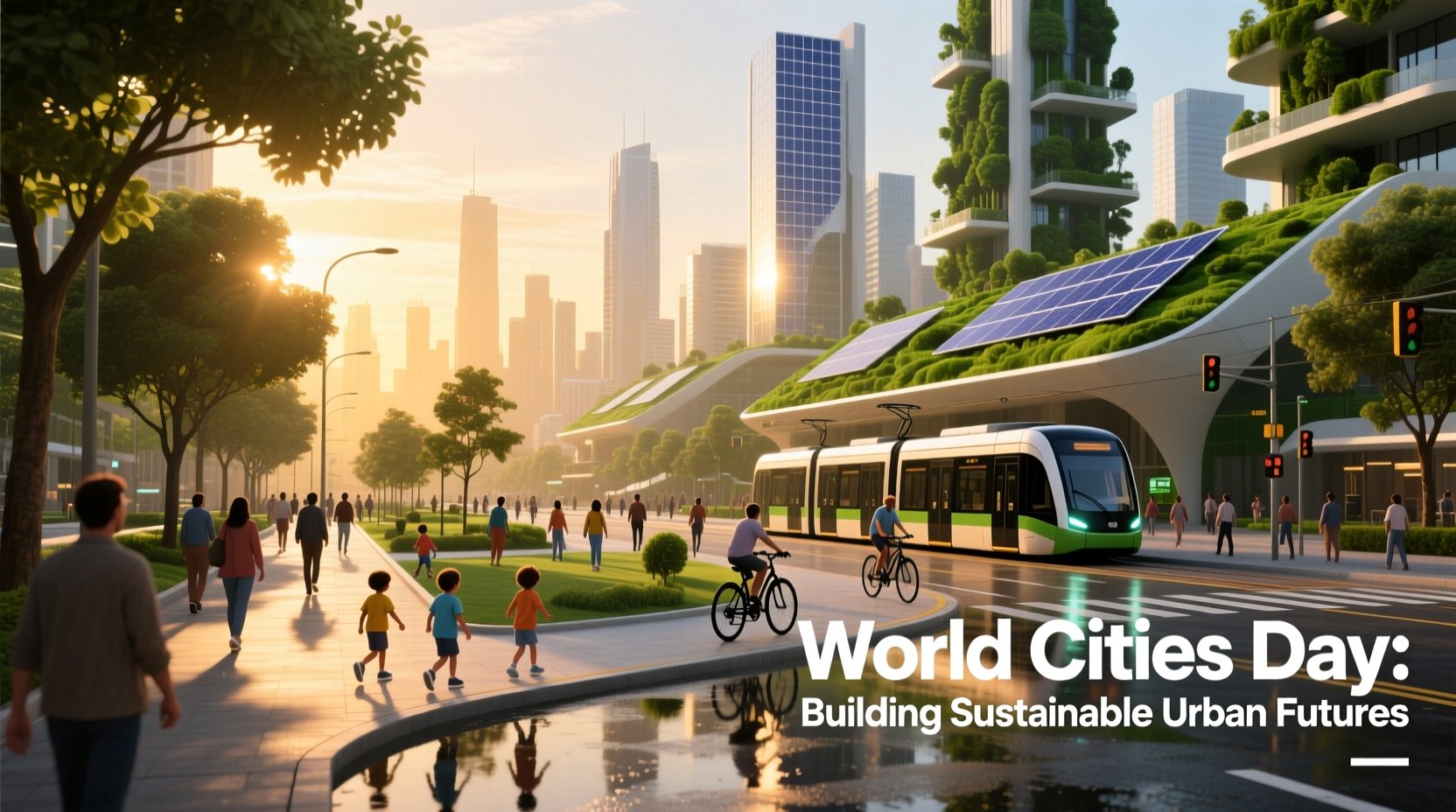
Every year on October 31st, the world unites to observe World Cities Day 🌍🏙️, a global initiative established by the United Nations to highlight the importance of sustainable urbanization and resilient city planning. As over 56% of the global population now lives in urban areas—a figure projected to rise to nearly 60% by 2030—cities have become epicenters of economic growth, cultural exchange, and environmental challenges. World Cities Day serves as a vital platform for governments, communities, and stakeholders to reflect on how cities can be designed and managed to improve quality of life while addressing climate change, inequality, and infrastructure demands.
This international observance was officially established through UN General Assembly Resolution A/RES/68/239 in December 2013, following the conclusion of the Shanghai Forum on Urbanization. Its creation marked a pivotal moment in global recognition of urban issues as central to achieving the Sustainable Development Goals (SDGs), particularly SDG 11: Make cities and human settlements inclusive, safe, resilient, and sustainable. With rapid urban expansion occurring especially in developing nations, World Cities Day emphasizes proactive strategies that balance development with sustainability.
The roots of World Cities Day trace back to the Shanghai International Expo 2010, whose theme was “Better City, Better Life.” This landmark event brought together over 190 countries and attracted more than 73 million visitors, showcasing innovative urban solutions from around the globe. The success of the Expo sparked discussions about the need for an ongoing global dialogue on urban challenges and opportunities.
In response, the United Nations General Assembly adopted Resolution A/RES/68/239 on December 27, 2013, formally designating October 31 as World Cities Day. This resolution acknowledged that urbanization is one of the most transformative forces of the 21st century, with profound implications for poverty reduction, job creation, energy efficiency, and social inclusion. The date was strategically chosen to follow the anniversary of the closing of the Shanghai Expo, symbolizing continuity and commitment to urban innovation.
Since its inception, World Cities Day has grown into a cornerstone of the UN’s urban agenda. Each year features a unique theme that addresses pressing urban concerns such as climate resilience, housing affordability, digital transformation, and equitable access to services. For example:
These themes guide events, policy dialogues, and grassroots initiatives worldwide, reinforcing the idea that local actions contribute to global progress.
The primary purpose of World Cities Day is threefold: to raise awareness about urban challenges, to promote cooperation among stakeholders, and to inspire action toward sustainable urban development. It acts as both a mirror and a catalyst—reflecting current urban realities while pushing for transformative change.
One of the key impacts of this observance lies in its ability to influence national and municipal policies. Governments use the occasion to launch new urban programs, release reports on city performance, or announce investments in public transportation, green spaces, or affordable housing. For instance, several cities have used World Cities Day to unveil plans for carbon-neutral districts or smart mobility systems.
Beyond policy, the day fosters community engagement. Citizens participate in clean-up campaigns, tree planting drives, urban art projects, and forums discussing local needs. Educational institutions organize workshops on urban planning, while NGOs advocate for marginalized populations often left behind in city development.
To illustrate the measurable impact of urban interventions aligned with World Cities Day goals, consider the following table highlighting select outcomes from recent years:
| Year | Theme | Notable Outcome | Location |
|---|---|---|---|
| 2023 | Accelerating Sustainable Urbanization | New urban resilience fund launched in Southeast Asia | Manila, Philippines |
| 2022 | Act Local to Go Global | 50+ cities pledged zero-waste targets | Global |
| 2021 | Better City, Better Life | Digital accessibility improved in 30 Indian cities | India |
| 2020 | Valuing Our Communities and Cities | Community-led mapping of informal settlements in Nairobi | Kenya |
Moreover, World Cities Day supports data collection and benchmarking efforts through partnerships with organizations like UN-Habitat, the World Bank, and C40 Cities. These collaborations help track progress on SDG 11 indicators such as air quality, access to public transport, and proportion of urban population living in slums.
What sets World Cities Day apart is its truly global reach. From megacities like Tokyo and New York to small towns in rural Africa, communities across all continents engage in meaningful ways. The United Nations hosts an annual Global Observance Event, which rotates among different regions to ensure diverse representation.
Recent host cities include:
At the grassroots level, participation takes many forms. In Latin America, youth groups organize bike parades to promote non-motorized transport 🚴♂️. In Africa, local leaders hold town halls to discuss sanitation and water access. In Europe, architects open studios to showcase eco-friendly building designs. Meanwhile, digital campaigns on platforms like Twitter and Instagram amplify voices using hashtags such as #WorldCitiesDay and #UrbanFuture.
International agencies also play a critical role. UN-Habitat, the UN program dedicated to sustainable urban development, leads coordination efforts and provides technical support to member states. Regional bodies like the European Union, ASEAN, and the African Union integrate World Cities Day into their urban policy frameworks, encouraging cross-border learning and resource sharing.
Schools and universities incorporate the day into curricula, teaching students about urban ecology, civic responsibility, and smart city technologies. Competitions for best urban design ideas or short films on city life further deepen engagement among younger generations.
World Cities Day is far more than a symbolic gesture—it is a call to action 📣 for reimagining how we live, work, and connect in urban environments. As cities continue to grow at an unprecedented pace, the decisions made today will shape the well-being of billions tomorrow. This international day reminds us that sustainable urbanization is not optional; it is essential for combating climate change, reducing inequality, and ensuring dignity for all.
By fostering collaboration between governments, civil society, the private sector, and individuals, World Cities Day creates momentum for real change. Whether it’s adopting green roofs, expanding pedestrian zones, or upgrading informal settlements, every effort counts toward building inclusive and resilient cities.
To learn more about how you can get involved, explore past themes, or access educational resources, visit the official United Nations page for this important observance: World Cities Day Official Website. Together, we can turn the vision of better cities into reality—one neighborhood, one policy, one innovation at a time. 🌱🏙️🌍