Address
304 North Cardinal St.
Dorchester Center, MA 02124
Work Hours
Monday to Friday: 7AM - 7PM
Weekend: 10AM - 5PM
Address
304 North Cardinal St.
Dorchester Center, MA 02124
Work Hours
Monday to Friday: 7AM - 7PM
Weekend: 10AM - 5PM


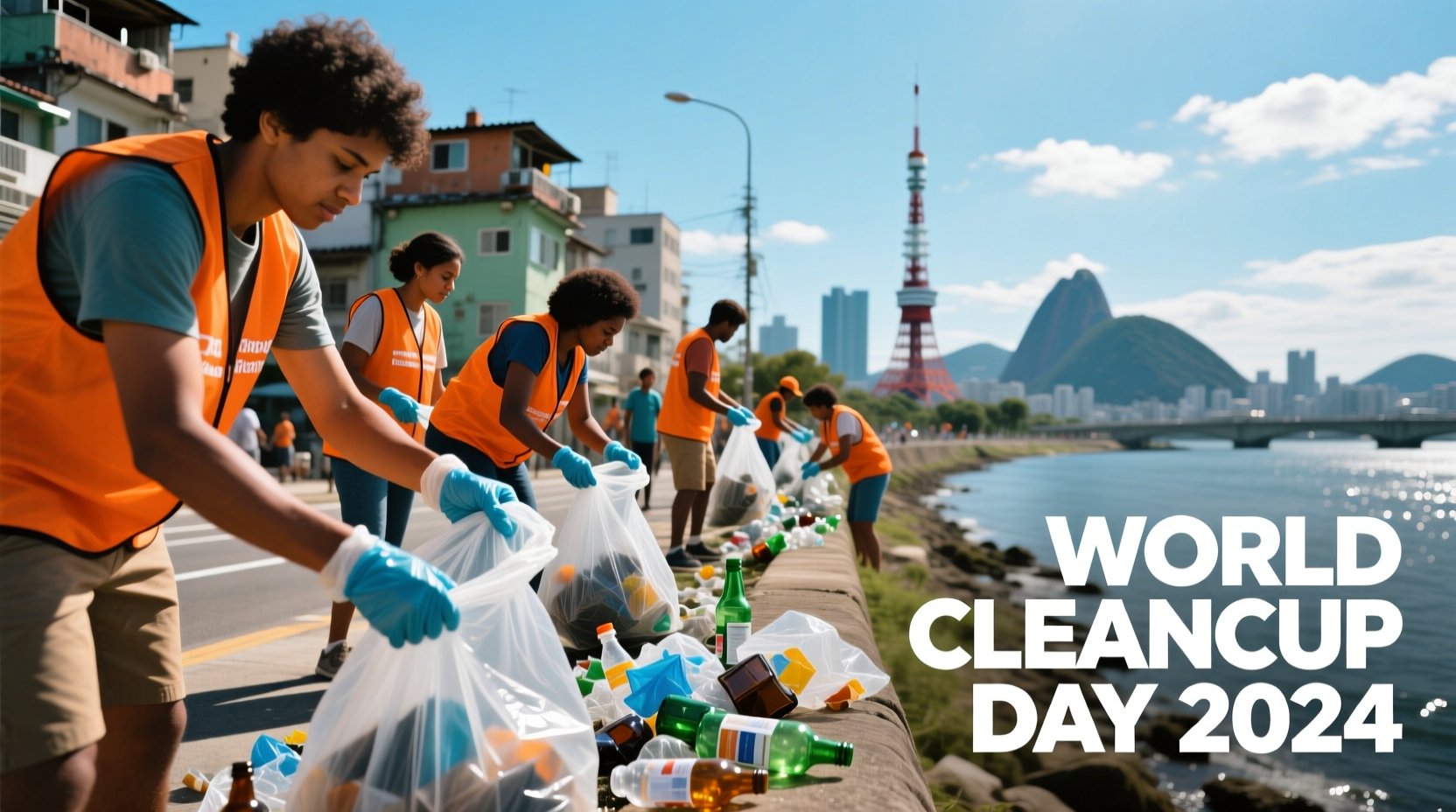
Every year on the third Saturday of September, millions of people across the globe unite for a common cause: World Cleanup Day. Recognized officially by the United Nations through Resolution A/RES/78/122, this international observance brings together governments, communities, schools, and individuals in a powerful demonstration of collective responsibility toward our planet. With over 180 countries participating annually, World Cleanup Day is more than just a cleanup event—it’s a movement to combat pollution, raise environmental awareness, and inspire long-term behavioral change.
The urgency behind this day cannot be overstated. According to the United Nations Environment Programme (UNEP), approximately 9 to 14 million metric tons of plastic waste enter our oceans each year, harming marine life, disrupting ecosystems, and threatening human health. Land-based litter also contaminates soil, clogs drainage systems, and contributes to climate change through methane emissions from decomposing waste in landfills. World Cleanup Day addresses these challenges head-on by mobilizing global citizens to take tangible action—removing trash, mapping waste hotspots, and advocating for sustainable policies.
World Cleanup Day traces its origins back to 2008 in Estonia, where a small civic initiative called Let’s Do It! World inspired 50,000 volunteers to clean up the entire country in just five hours. This remarkable success sparked a global vision: what if the whole world cleaned up together? In 2018, that vision became reality when the first official World Cleanup Day was held, engaging over 15 million people from 150 countries.
The momentum continued to grow, culminating in the adoption of UN General Assembly Resolution A/RES/78/122 on May 10, 2023. This landmark resolution formally established September 20 as the annual date for World Cleanup Day, recognizing it as an official UN observance. The resolution emphasizes the need for coordinated global efforts to address solid waste management, promote circular economies, and achieve Sustainable Development Goals (SDGs), particularly SDG 11 (Sustainable Cities and Communities), SDG 12 (Responsible Consumption and Production), and SDG 14 (Life Below Water).
The recognition by the UN not only legitimizes the movement but also amplifies its reach, encouraging intergovernmental cooperation, national policy reforms, and increased funding for waste infrastructure in developing nations.
The primary purpose of World Cleanup Day is threefold: cleanup, awareness, and prevention. While physically removing waste is the most visible activity, the deeper goal is to shift societal attitudes toward consumption, disposal, and environmental stewardship.
The impact has been significant. For example, during the 2023 event:
To illustrate the scale of participation and impact, here is a summary table of recent global engagement:
| Year | Countries Participating | Estimated Participants | Waste Collected (Tons) | Key Outcomes |
|---|---|---|---|---|
| 2018 | 150 | 15 million | 100,000 | Global launch; inspired national cleanup initiatives |
| 2020 | 180 | 20 million | 300,000 | Digital tracking introduced; youth engagement surged |
| 2022 | 184 | 22 million | 450,000 | Policy changes in 12 countries; school programs expanded |
| 2023 | 186 | 24 million | 500,000+ | UN resolution adopted; corporate partnerships increased |
These figures demonstrate not only growth in numbers but also deepening institutional support and measurable environmental outcomes.
One of the most inspiring aspects of World Cleanup Day is its universal appeal. Regardless of language, culture, or economic status, people come together with gloves, bags, and determination to reclaim their environments.
In Africa, countries like Kenya and Nigeria have used the day to tackle plastic pollution in major cities and waterways. Community leaders organize youth groups and religious organizations to participate, turning cleanups into civic education events.
In Europe, nations such as Germany, Sweden, and Portugal integrate the day into national environmental strategies, with municipalities providing logistical support and public transportation for volunteers.
In Asia, massive mobilizations occur in India, Indonesia, and Japan. In 2023, Tokyo hosted one of the largest urban cleanups, involving thousands of students and corporate employees along the Sumida River.
Latin American countries like Colombia, Brazil, and Mexico focus on protecting biodiversity-rich areas, including rainforests and coastal zones. Indigenous communities often lead these efforts, emphasizing traditional ecological knowledge.
Even in conflict-affected regions, World Cleanup Day serves as a symbol of hope and unity. In parts of the Middle East and Eastern Europe, cross-community cleanups have fostered dialogue and cooperation among divided populations.
The use of technology further enhances global coordination. The TrashOut app and other digital platforms allow participants to log waste data, geotag pollution sites, and generate real-time maps accessible to researchers and city planners. This data-driven approach turns volunteerism into actionable science.
World Cleanup Day is far more than a one-day event—it is a catalyst for lasting environmental transformation. By uniting millions around a shared mission, it demonstrates that collective action can overcome even the most daunting ecological challenges. From reducing ocean-bound plastic to empowering local communities, the ripple effects of this global effort are profound and far-reaching.
As individuals, we hold the power to make a difference. Whether organizing a neighborhood cleanup, educating children about waste reduction, or advocating for greener policies, every action counts. The official recognition by the United Nations through Resolution A/RES/78/122 underscores the importance of sustained global engagement in building a cleaner, healthier, and more sustainable future for all.
To learn more about how you can get involved, access educational resources, or view global statistics, visit the official United Nations page for this important observance: World Cleanup Day at the United Nations. Together, we can turn the tide on pollution—one pickup at a time. 🌎💚