Address
304 North Cardinal St.
Dorchester Center, MA 02124
Work Hours
Monday to Friday: 7AM - 7PM
Weekend: 10AM - 5PM
Address
304 North Cardinal St.
Dorchester Center, MA 02124
Work Hours
Monday to Friday: 7AM - 7PM
Weekend: 10AM - 5PM


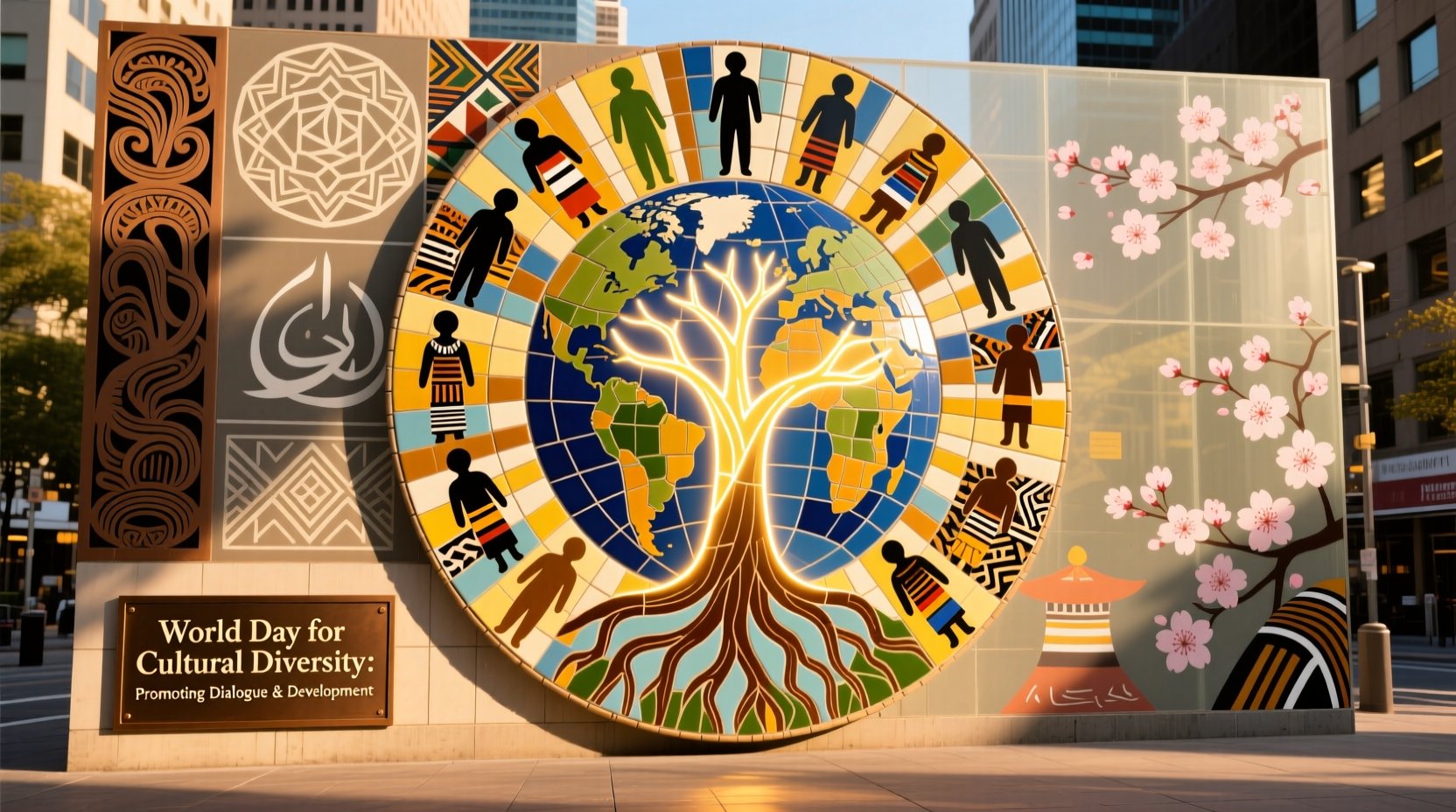
The World Day for Cultural Diversity for Dialogue and Development, observed annually on May 21, stands as a powerful testament to humanity’s rich cultural mosaic. Established by the United Nations General Assembly through Resolution A/RES/57/249, this international day serves not only to honor the myriad forms of cultural expression across the globe but also to underscore their critical role in fostering peace, sustainable development, and mutual understanding 🕊️.
In an era marked by geopolitical tensions, migration challenges, and digital globalization, cultural diversity is more than just a social asset—it is a strategic imperative. UNESCO estimates that over 7,000 languages are spoken worldwide, with countless traditions, art forms, cuisines, and belief systems shaping human identity. The World Day for Cultural Diversity calls upon governments, civil society, educators, artists, and individuals to recognize this wealth and actively promote intercultural dialogue as a foundation for inclusive societies.
This article delves into the origins, objectives, global impact, and participatory nature of this significant observance, offering insights into how cultural pluralism contributes to both dialogue and sustainable development—a dual mission enshrined in its very name.
The roots of the World Day for Cultural Diversity for Dialogue and Development trace back to the early 2000s, a period when globalization sparked intense debate about cultural homogenization. As Western media, consumer brands, and digital platforms expanded globally, concerns grew over the erosion of local cultures, indigenous knowledge systems, and linguistic heritage.
In response, UNESCO adopted the Universal Declaration on Cultural Diversity in November 2001—just months after the September 11 attacks—which emphasized culture as a source of innovation, resilience, and peacebuilding. This landmark document affirmed that “culture takes diverse forms across time and space” and called for policies to protect and promote cultural expressions.
Building on this momentum, the United Nations General Assembly proclaimed May 21 as the official observance day through Resolution A/RES/57/249 in December 2002. The resolution explicitly linked cultural diversity with two core UN goals: dialogue among civilizations and sustainable development. It urged member states, international organizations, and civil society to mark the day through educational activities, public awareness campaigns, and policy initiatives.
| Year | Event | Significance |
|---|---|---|
| 2001 | UNESCO adopts Universal Declaration on Cultural Diversity | Laid ethical and intellectual foundation for recognizing culture as a public good |
| 2002 | UN General Assembly adopts Resolution A/RES/57/249 | Officially established May 21 as World Day for Cultural Diversity |
| 2005 | Adoption of UNESCO Convention on the Protection and Promotion of the Diversity of Cultural Expressions | Provided legal framework for national policies supporting cultural industries |
| 2015 | Sustainable Development Goals (SDGs) launched | Culture integrated into Goal 4 (education), Goal 8 (economic growth), and Goal 11 (cities) |
The purpose of the World Day extends far beyond symbolic celebration. It aims to transform how societies value cultural differences—not as barriers, but as bridges toward innovation, economic vitality, and peaceful coexistence.
Cultural diversity directly supports several Sustainable Development Goals (SDGs):
According to UNESCO, the global creative economy—fueled by cultural content—is one of the fastest-growing sectors:
| Creative Sector | Global Exports (USD billions) | Top Exporting Regions |
|---|---|---|
| Film & Audiovisual | $120B | North America, Europe, India |
| Musical Products | $30B | USA, UK, South Korea |
| Design & Visual Arts | $75B | Italy, Japan, Brazil |
| Traditional Crafts | $40B | Sub-Saharan Africa, Southeast Asia |
By celebrating cultural diversity, the UN promotes not only tolerance but also entrepreneurship, innovation, and equitable economic opportunities.
Each year on May 21, cities, schools, museums, NGOs, and cultural institutions around the world organize events that highlight the beauty and importance of cultural exchange.
In recent years, digital outreach has amplified the reach of the observance. Campaigns like #CultureCounts and #DiversityDay trend globally, featuring user-generated content such as:
UNESCO and the UN Alliance of Civilizations (UNAOC) often lead online webinars, bringing together policymakers, artists, and youth advocates from six continents.
Schools play a pivotal role. Educators use the day to teach students about cultural sensitivity through activities like:
These efforts instill values of respect and curiosity from an early age—critical for long-term societal change.
The World Day for Cultural Diversity for Dialogue and Development is far more than a calendar event—it is a call to action. In a world too often divided by fear, misinformation, and exclusion, this day reminds us that our differences are not weaknesses but sources of strength, creativity, and resilience 💪.
Cultural diversity fuels innovation in science, art, business, and diplomacy. When we embrace multiple perspectives, we solve problems more effectively and build societies that are fairer and more dynamic. Moreover, protecting minority languages, safeguarding intangible heritage, and ensuring equitable access to cultural participation are essential components of human rights and sustainable progress.
As individuals, we can contribute by learning about other cultures, supporting local artists, challenging prejudice, and advocating for inclusive policies. Governments and institutions must continue investing in cultural education, creative economies, and interfaith initiatives.
To learn more about how you can get involved, explore official resources and global events at the United Nations’ dedicated page: World Day for Cultural Diversity for Dialogue and Development. Together, let’s celebrate our shared humanity—one culture at a time. 🌏✨