Address
304 North Cardinal St.
Dorchester Center, MA 02124
Work Hours
Monday to Friday: 7AM - 7PM
Weekend: 10AM - 5PM
Address
304 North Cardinal St.
Dorchester Center, MA 02124
Work Hours
Monday to Friday: 7AM - 7PM
Weekend: 10AM - 5PM


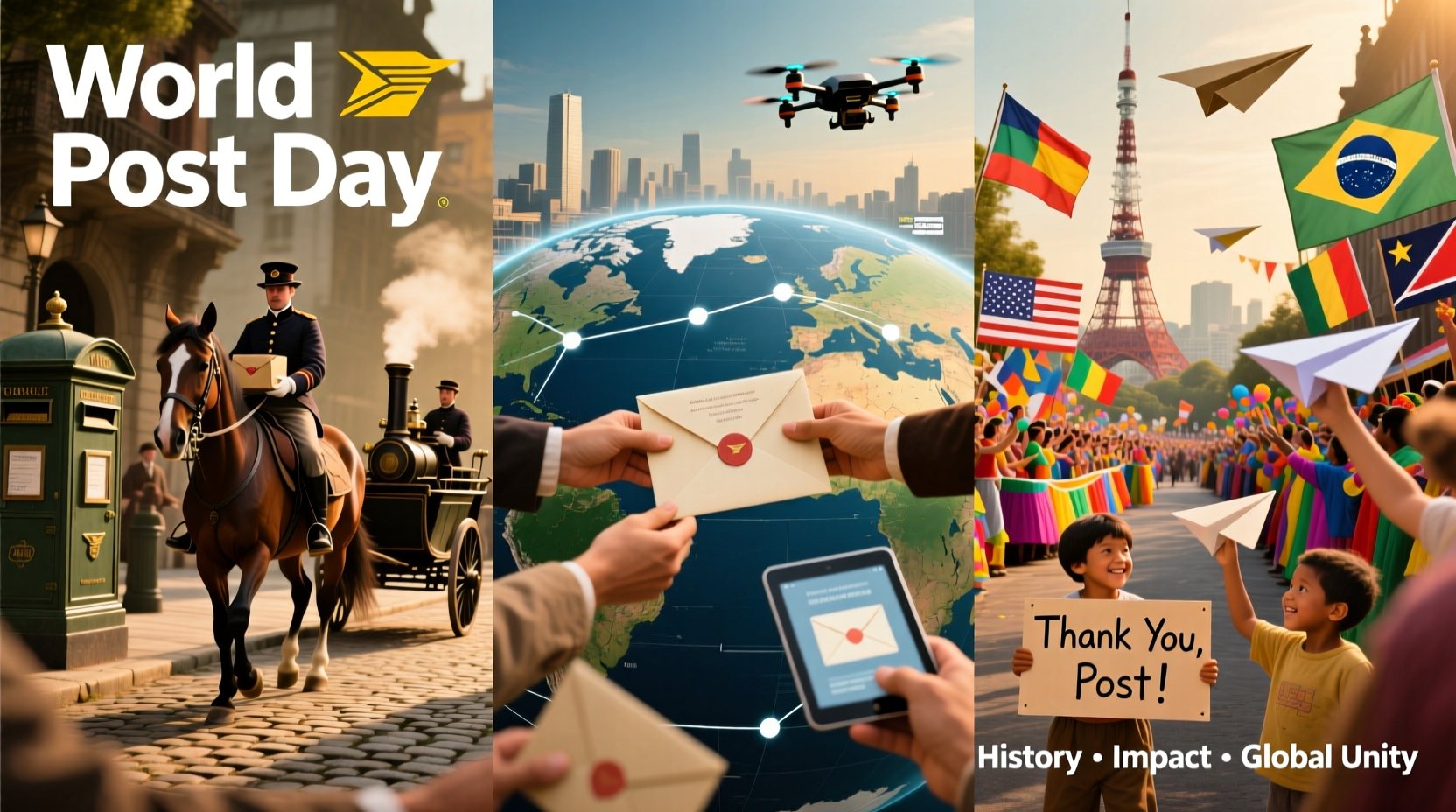
Every year on October 9, nations around the world commemorate World Post Day, a significant international observance established by the Universal Postal Union (UPU) to highlight the vital role of postal services in global communication, economic development, and social connectivity. This long-standing tradition traces its roots back to 1874, when the UPU was founded in Bern, Switzerland, unifying postal systems across borders and laying the foundation for modern international mail exchange. World Post Day is more than just a tribute to letters and packages—it’s a celebration of how postal networks bridge distances, empower communities, and support sustainable development. From delivering life-saving medicines in remote villages to enabling e-commerce growth in urban centers, the postal sector remains an indispensable pillar of global infrastructure.
The history of World Post Day begins with the creation of the Universal Postal Union, one of the oldest international organizations in the world and a specialized agency of the United Nations. Founded on October 9, 1874, during the Postal Union Congress in Bern, the UPU standardized international mail delivery, eliminating the need for multiple postage fees and complex routing procedures between countries. This breakthrough made cross-border communication accessible and affordable, transforming the way people and businesses connected globally.
Recognizing the importance of this milestone, the UPU officially designated October 9 as World Post Day during its 1969 Congress in Tokyo. Since then, the day has been observed annually to honor the establishment of the UPU and to raise awareness about the evolving role of postal services in the digital age. Over the decades, postal systems have adapted to technological changes—integrating barcode tracking, digital payment solutions, and last-mile logistics innovations—while maintaining their core mission of universal service.
Interestingly, the UPU predates the United Nations itself and became a UN specialized agency in 1948. With 192 member countries, it ensures that every individual, regardless of location, has access to reliable postal services. This principle of universality is especially crucial in rural and underserved regions where post offices often serve as the only formal link to government services, financial institutions, and healthcare providers.
The primary purpose of World Post Day is to recognize the contributions of postal workers, promote innovation within the postal sector, and advocate for policies that strengthen postal networks as essential public utilities. In an era dominated by instant messaging and email, it’s easy to overlook the physical infrastructure that underpins global trade, emergency response, and inclusive communication.
Consider these key impacts of modern postal services:
To illustrate the scale of global postal operations, consider the following data:
| Metric | Global Estimate |
|---|---|
| Total Annual Mail Volume | Approx. 430 billion items |
| E-commerce Parcels Handled | Over 15 billion annually |
| Postal Workers Worldwide | Over 5 million employees |
| Countries with Universal Postal Service | All 192 UPU member states |
| UN Sustainable Development Goals Supported | At least 8 out of 17 |
Each year, World Post Day features a unique theme to focus attention on emerging challenges and opportunities. Recent themes include “Post for Planet” (2023), emphasizing sustainability, and “Empowering Lives Through the Post” (2022), highlighting the social impact of postal services. These campaigns inspire national postal operators to launch educational events, open house tours, and special stamp releases to engage the public.
World Post Day is celebrated in diverse and creative ways across the globe, reflecting both cultural traditions and national priorities. Governments, postal operators, schools, and civil society organizations participate through exhibitions, workshops, media campaigns, and community outreach programs.
In Japan, Japan Post hosts technology fairs showcasing robotic sorting systems and drone deliveries. In India, the Department of Posts organizes nationwide essay competitions for students on topics like “The Future of Mail in a Digital World.” Meanwhile, in Switzerland—the birthplace of the UPU—official ceremonies are held at the UPU headquarters in Bern, attended by diplomats, postal leaders, and UN representatives.
Many countries issue commemorative stamps to mark the occasion. For example:
Beyond symbolic gestures, some nations use World Post Day to announce policy reforms or new digital initiatives. In 2023, Kenya announced a nationwide rollout of mobile postal banking kiosks, while Brazil launched a blockchain-based parcel tracking pilot program.
The UPU also coordinates a global poster competition for youth, encouraging children aged 8–15 to express their vision of the future of mail. Winning designs are displayed at UPU offices and featured in international press materials, fostering intergenerational dialogue about the value of postal services.
Moreover, multinational corporations and logistics firms often partner with national posts on this day to promote corporate social responsibility projects—such as donating school supplies, supporting literacy programs, or funding rural delivery expansions.
As we reflect on the significance of World Post Day, it becomes clear that postal services are far more than carriers of letters—they are enablers of opportunity, equity, and connection in an increasingly interconnected world. Whether delivering vaccines to mountain clinics, connecting families separated by oceans, or powering the digital economy, the global postal network performs quietly but indispensably every single day.
This annual observance reminds us to appreciate the dedication of millions of postal workers—from mail carriers and clerks to engineers and policymakers—who ensure that no one is left out of the global conversation. It also challenges governments and private stakeholders to invest in resilient, inclusive, and sustainable postal systems for future generations.
To learn more about how World Post Day is shaping the future of communication and development, we encourage you to explore the official resources provided by the United Nations and the Universal Postal Union. Discover upcoming events, educational materials, and ways your community can get involved by visiting the World Post Day website today. Together, we can support a world where everyone, everywhere, stays connected.