Address
304 North Cardinal St.
Dorchester Center, MA 02124
Work Hours
Monday to Friday: 7AM - 7PM
Weekend: 10AM - 5PM
Address
304 North Cardinal St.
Dorchester Center, MA 02124
Work Hours
Monday to Friday: 7AM - 7PM
Weekend: 10AM - 5PM


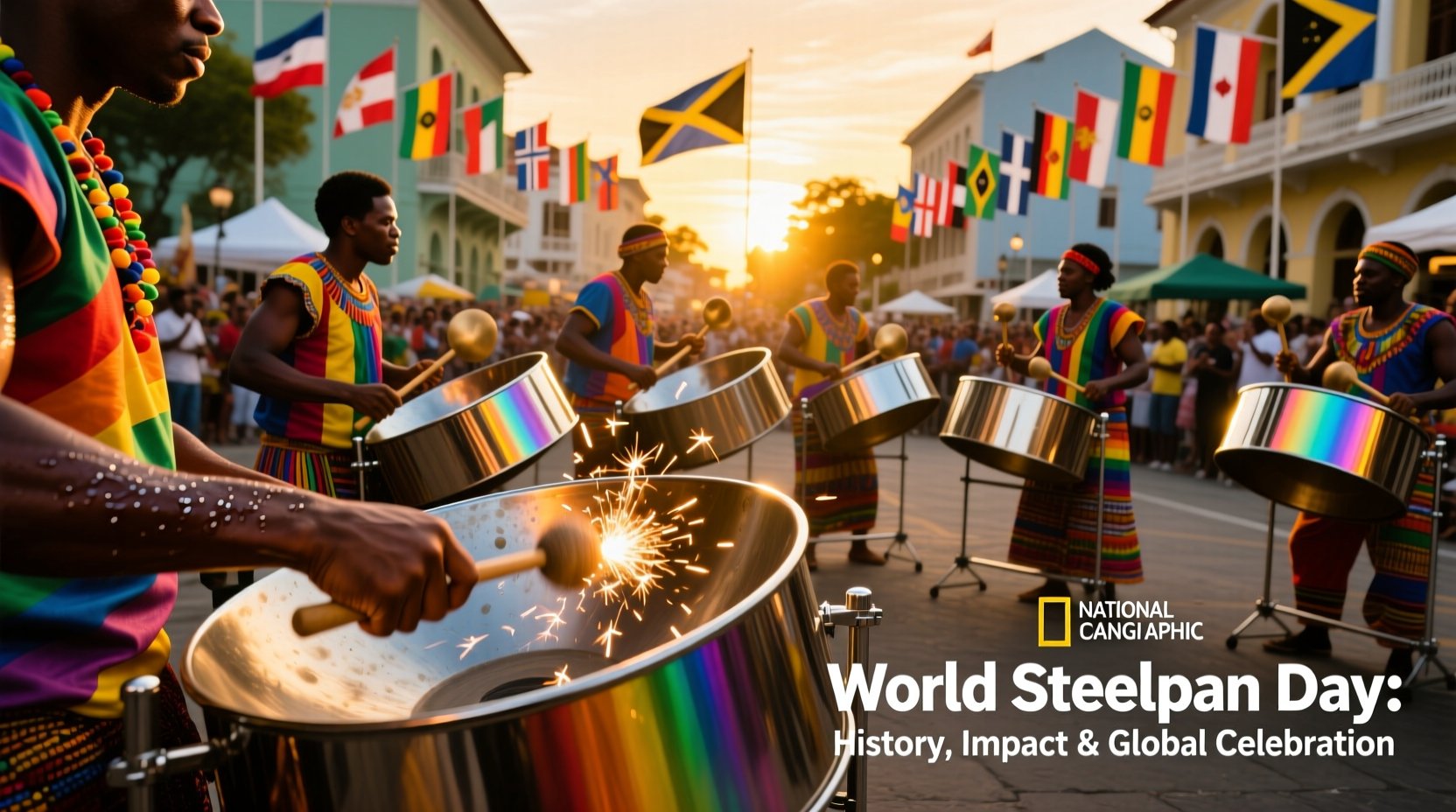
Every year on August 30, music lovers, cultural advocates, and United Nations member states come together to observe World Steelpan Day, a vibrant international observance established by the UN General Assembly through resolution A/RES/77/316. This day honors the steelpan—the national instrument of Trinidad and Tobago—and celebrates its profound cultural, historical, and social significance in global music and heritage. Recognized officially by the United Nations, World Steelpan Day not only highlights the artistic innovation behind the instrument but also promotes intercultural dialogue, youth empowerment, and sustainable development through music 🥁🎶.
The steelpan is more than just a musical instrument; it represents resilience, creativity, and the transformative power of art born from adversity. Originating in the 20th century from the streets of Port of Spain, the steelpan evolved from discarded oil drums into a sophisticated melodic percussion instrument capable of playing complex harmonies. Its inclusion in the UN calendar of international days underscores the Organization’s commitment to preserving intangible cultural heritage and advancing inclusive societies through creative expression.
The story of the steelpan begins in the early 1930s in Trinidad and Tobago, where Afro-Caribbean communities transformed industrial waste—particularly 55-gallon oil drums left behind by American and British oil companies—into musical instruments. This innovation emerged during a time of social marginalization and colonial suppression of African-derived cultural practices such as drumming and carnival celebrations.
Faced with bans on traditional drums after emancipation, communities turned to alternative materials, experimenting with metal containers and gradually shaping concave surfaces that could produce distinct pitches. By the 1940s, pioneers like Winston ‘Spree’ Simon, Ellie Mannette, and Anthony Williams had refined the instrument’s design, laying the foundation for what we now recognize as the modern steelpan.
Initially associated with steelbands formed in working-class neighborhoods, the steelpan gained popularity through street performances and Carnival competitions. Over decades, it transcended local boundaries, becoming a symbol of national pride for Trinidad and Tobago and eventually earning international acclaim. In 2011, UNESCO inscribed the steelpan tradition on its Representative List of the Intangible Cultural Heritage of Humanity, recognizing its role in fostering community identity and continuity.
The journey from stigma to celebration culminated in December 2022 when the United Nations General Assembly adopted Resolution A/RES/77/316, officially proclaiming August 30 as World Steelpan Day. This landmark decision was led by Trinidad and Tobago and co-sponsored by over 80 countries, reflecting broad global support for cultural diversity and artistic innovation.
The designation of World Steelpan Day serves multiple interconnected purposes aligned with the United Nations’ broader goals:
One of the most impactful aspects of this observance is its ability to transform public spaces into centers of joy and learning. Schools, cultural institutions, and city plazas host steelpan workshops, concerts, and educational programs that engage diverse audiences. For example, in New York City, Toronto, London, and Johannesburg, diaspora communities organize large-scale events that blend tradition with contemporary genres like jazz, pop, and classical fusion.
| Year | Milestone | Global Significance |
|---|---|---|
| 1930s–1940s | Invention and refinement of the steelpan in Trinidad | Birth of a new musical genre rooted in resistance and innovation |
| 1951 | Trinidad and Tobago Steelband performs at the Festival of Britain | First major international exposure |
| 2011 | UNESCO inscription of steelpan as Intangible Cultural Heritage | Global recognition of cultural value |
| 2022 | Adoption of UN Resolution A/RES/77/316 | Institutionalization of World Steelpan Day |
| 2023 | First official observance at UN Headquarters in New York | Launch of annual global celebrations |
Beyond symbolism, the day drives tangible outcomes. Governments and NGOs use the occasion to fund music programs in schools, restore historic steelbands, and digitize archives of recordings and oral histories. It also opens avenues for artists to access international platforms, collaborate across borders, and advocate for intellectual property rights related to traditional knowledge.
Since its inception, World Steelpan Day has sparked dynamic participation across continents. From formal concerts at the United Nations to grassroots jam sessions in Caribbean villages, the rhythm of the steelpan unites people across age, race, and nationality.
In North America, cities with large Caribbean populations—such as Brooklyn, Miami, and Toronto—host all-day festivals featuring steelpan orchestras, dance troupes, and food markets. Educational institutions incorporate the instrument into curricula, teaching students about acoustics, history, and teamwork through ensemble playing.
In Europe, countries like the UK, Germany, and the Netherlands have active steelpan ensembles in schools and community centers. The Notting Hill Carnival in London, one of the largest street festivals in Europe, prominently features steelbands, drawing millions of spectators annually.
Africa has seen growing interest, with nations like South Africa and Ghana introducing steelpan programs to enrich music education and strengthen Pan-African cultural ties. Meanwhile, in Asia and Oceania, Japan, Australia, and Singapore have embraced the instrument through university music departments and cultural exchange initiatives.
The United Nations plays a central coordinating role, encouraging member states to organize events and share best practices. Each year, the UN Department of Global Communications partners with cultural organizations to broadcast live performances, panel discussions, and documentaries highlighting the steelpan’s legacy. Social media campaigns using hashtags like #WorldSteelpanDay and #PanyardToPeace amplify visibility and invite digital engagement worldwide.
Notably, the observance emphasizes inclusivity—people with disabilities, women, and underrepresented groups are actively encouraged to participate. Initiatives such as adaptive steelpan designs and sign-language interpreted concerts ensure accessibility for all.
World Steelpan Day is far more than a tribute to a musical instrument—it is a powerful affirmation of human creativity, cultural resilience, and the unifying force of art. By celebrating the steelpan, we honor the ingenuity of those who turned hardship into harmony and affirm our shared responsibility to protect cultural expressions that enrich humanity.
This international day reminds us that culture is not peripheral to development—it is central. Through music, we educate, heal, reconcile, and inspire. As climate change, conflict, and inequality challenge our world, the joyful resonance of the steelpan offers a message of hope, unity, and transformation.
We invite you to experience the magic of World Steelpan Day—attend a concert, learn about its history, or simply listen to the sweet tones of a pan melody. To discover upcoming events, educational resources, and official statements from the United Nations, please visit the dedicated page on the UN website: https://www.un.org/en/observances/steelpan-day.
Let the rhythm move you. Let the culture inspire you. And let us all play our part in building a more harmonious world—one note at a time. 🌈🎵